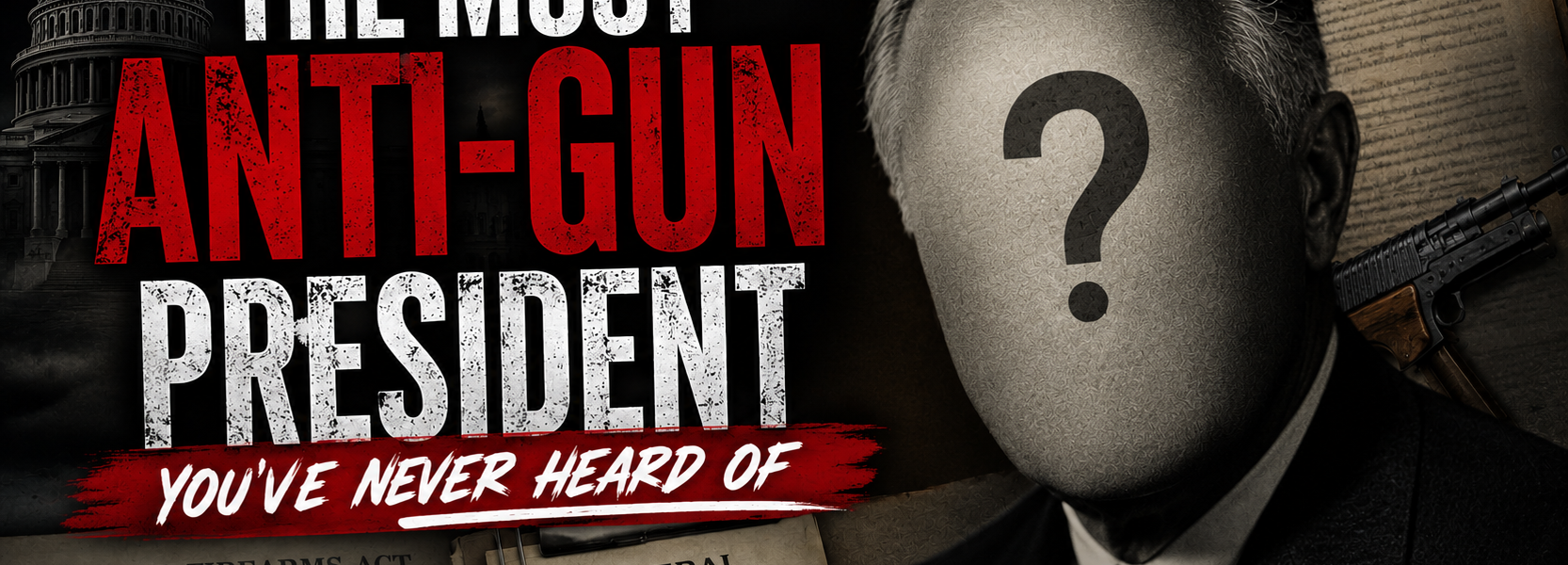
When Americans debate gun rights, the conversation usually centers on modern presidents. Names like Obama, Biden, Trump, and Clinton dominate the discussion. Yet the most aggressive federal attack on civilian firearm ownership may have come from a president few gun owners ever think about: Franklin D. Roosevelt.
For many Americans, Roosevelt is remembered as the president who guided the nation through the Great Depression and World War II. He is often celebrated for expanding the role of the federal government and creating many of the programs that still exist today.
What is less remembered is that Roosevelt also signed the first major federal gun control law in American history.
The Law That Changed Everything
In 1934, Roosevelt signed the National Firearms Act into law.
Prior to that point, firearm regulation was largely handled by states and local governments. The federal government had very little involvement in restricting what law-abiding Americans could own.
The National Firearms Act changed that.
The law imposed a massive tax on machine guns, short-barreled rifles, short-barreled shotguns, and suppressors. At the time, the $200 tax was an enormous sum, equivalent to thousands of dollars today. The goal was not simply to regulate ownership. It was to price many Americans out of exercising what they believed was a constitutional right.
The law also established federal registration requirements that would become the foundation for future federal firearms regulations.
The Federal Government’s New Approach
Supporters argued the law was necessary to combat gang violence during the era of Al Capone and other organized crime figures.
Critics saw something else.
Because the Constitution places limits on direct federal restrictions of rights, lawmakers structured the measure as a tax. Instead of outright banning certain firearms, the government imposed costs and paperwork requirements so burdensome that ownership became impractical for most citizens.
This strategy would later become a model for future gun regulations.
It Didn’t Stop There
Four years later, Roosevelt signed the Federal Firearms Act of 1938.
The law required gun dealers to obtain federal licenses and prohibited firearm sales to certain categories of individuals. While many of these restrictions seem commonplace today, they represented another major expansion of federal authority over firearm ownership.
Together, the 1934 and 1938 laws laid the groundwork for virtually every major federal gun control measure that followed.
Why Most Americans Don’t Know This
Roosevelt’s legacy is usually discussed through the lens of economic policy, wartime leadership, and the New Deal. His role in establishing federal firearms regulation often receives little attention.
Yet from the perspective of constitutional gun rights advocates, Roosevelt’s administration marked a turning point. Before Roosevelt, federal gun control was minimal. After Roosevelt, Washington had established both the legal precedent and the regulatory framework for increasingly expansive federal involvement.
Whether one supports or opposes these measures, the historical reality is difficult to deny.
The modern gun control debate did not begin in the 1960s.
It began under Franklin Roosevelt.
And many of the federal restrictions Americans still argue about today trace their origins back to decisions made during his administration nearly a century ago.