The United Nations wrapped up a major firearms conference in New York last week, but critics say what happened behind closed doors should concern every gun owner.
The meeting, officially known as the Ninth Biennial Meeting of States on Small Arms and Light Weapons, was billed as an effort to combat the illegal arms trade. But according to observers, the real agenda went much further.
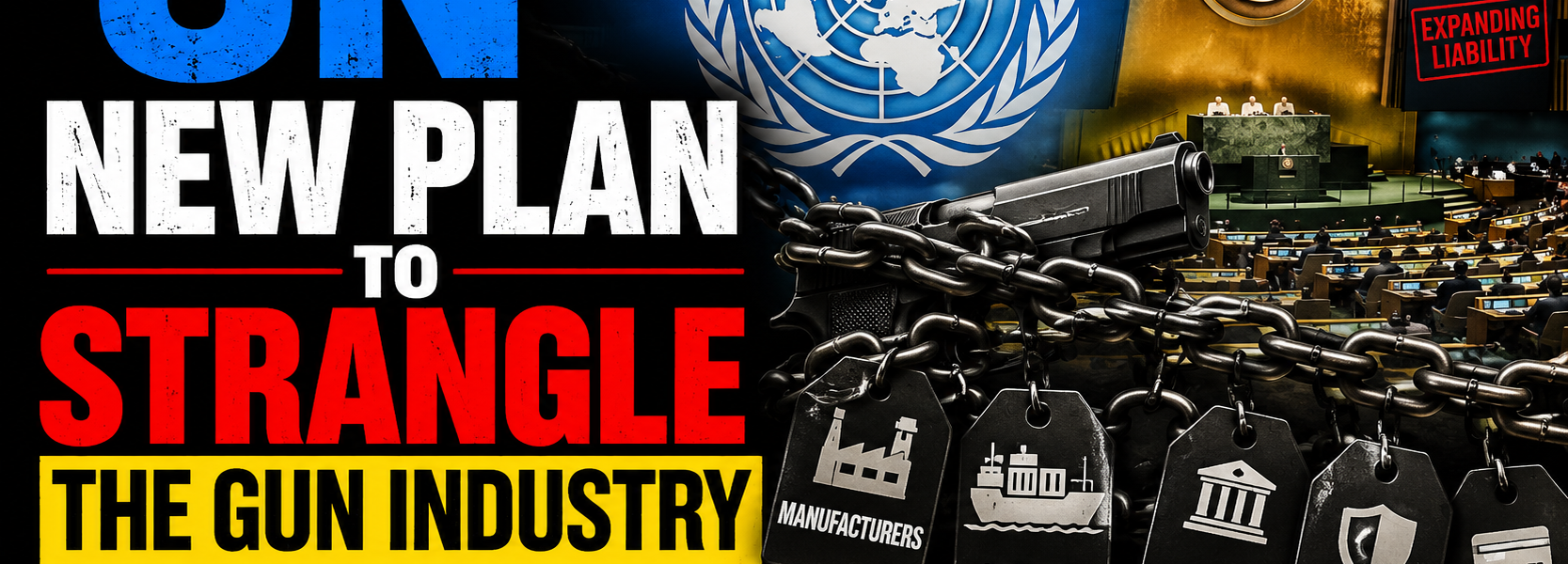
At the center of the controversy was a draft proposal that would establish an international “code of conduct” for the firearms industry. On the surface, it sounds harmless. In practice, opponents warn it could become a tool for holding manufacturers, distributors, shipping companies, banks, insurers, and payment processors responsible when criminals misuse firearms.
The strategy is familiar.
If gun-control advocates cannot ban firearms outright, they can make doing business with the firearms industry so legally dangerous that companies simply walk away.
That would allow anti-gun activists to achieve through lawsuits, liability threats, and corporate pressure what they cannot achieve through legislation.
Expanding Liability Across the Entire Industry
Critics argue the proposal represents a dramatic escalation in the global campaign against lawful firearm ownership.
Under theories already promoted in international forums, virtually anyone involved in the legal transfer of a firearm could potentially be blamed for future criminal misuse. The target would not just be gun manufacturers. It could include freight carriers, financial institutions, insurance providers, and payment processors.
The objective is clear: isolate the firearms industry economically and cut it off from the services it needs to operate.
New Global Standards on the Horizon
The meeting also advanced efforts to expand international firearm marking and tracing requirements.
Delegates were asked to endorse a UN-backed study that critics say could be used as “scientific evidence” for future regulations. Once incorporated into official UN programs, those findings could provide the foundation for broader global standards governing firearm manufacturing and identification.
At the same time, the UN launched a new Open-Ended Technical Experts Group tasked with developing recommendations for implementing international firearms agreements.
Critics say the process was stacked from the beginning.
Industry representatives with hands-on firearms expertise were largely excluded from participating, while academics and advocacy organizations were given prominent roles shaping future recommendations.
According to attendees, presentations focused heavily on so-called emerging threats such as modular firearms, polymer frames, and 3D-printed weapons.
Procedural Battle Erupts
The most contentious moment came during negotiations over the conference’s final outcome document.
The United States delegation objected to several provisions and sought formal votes on disputed language.
Instead of allowing member nations to vote, conference leadership relied on legal interpretations provided by UN attorneys that effectively blocked the process.
For an initiative that frequently promotes itself as consensus-based, critics called the move extraordinary.
The United States ultimately refused to join the consensus and formally objected to the document’s adoption.
Nevertheless, the outcome document was approved.
“We Have Lawyers”
Perhaps the most revealing moment came after the meeting had officially concluded.
As delegates were leaving, a senior official with the UN Office for Disarmament Affairs reportedly walked past the U.S. delegation and remarked:
“We have lawyers.”
Whether intended as a joke, a boast, or something else entirely, critics viewed the comment as a glimpse into how controversial policies can advance through procedural maneuvering even when significant objections are raised.
Why It Matters
For gun owners, the fight is no longer just about firearms themselves.
The emerging strategy appears focused on the entire ecosystem that supports lawful gun ownership: manufacturers, distributors, banks, insurers, shipping companies, and payment processors.
Rather than banning firearms directly, opponents fear international activists are attempting to make participation in the firearms industry too costly, too risky, and too controversial for businesses to continue.
The meeting may be over, but the broader campaign is not.
As one UN official acknowledged during the proceedings, this conference was only the beginning of a much larger process.
For supporters of the Second Amendment, that may be the most important takeaway of all.