
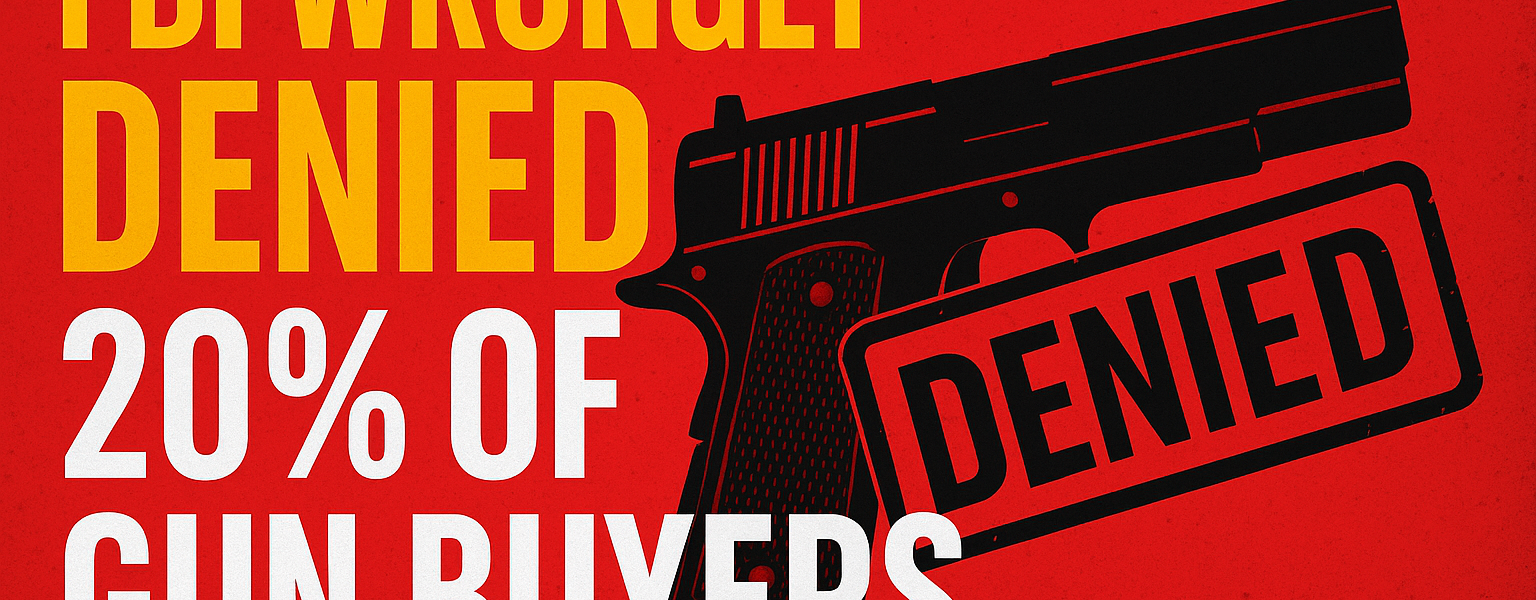
A newly released oversight analysis has uncovered a serious flaw inside the FBI’s National Instant Criminal Background Check System (NICS). According to the findings, over 20% of all denied gun purchases were later found to be wrongly rejected — false positives triggered by outdated records, mismatched identities, or incomplete criminal data.
For gun owners, this is not a small technical glitch. It strikes at the core of the system the federal government relies on to decide who may — and may not — exercise a constitutional right.
Why this matters:
-
False positives: The data suggests that a significant portion of “denied” buyers were actually fully eligible to purchase a firearm.
-
Due process issues: Many of those rejected never receive a proper explanation or a timely appeals process.
-
Systemic bias: Second Amendment groups argue the errors aren’t random. They disproportionately affect law-abiding citizens, military veterans, and people with common names.
-
Political implications: With lawmakers pushing to expand background checks, critics warn that a flawed system will simply deny more innocent people their rights.
Gun-rights advocates say the report confirms what they’ve warned for years: NICS looks clean on paper, but in practice it’s an unreliable database that can quietly strip constitutional rights without due process.
The oversight group behind the findings is calling for a full audit, immediate transparency from the FBI, and a modernization of the system to prevent wrongful denials from continuing unnoticed.