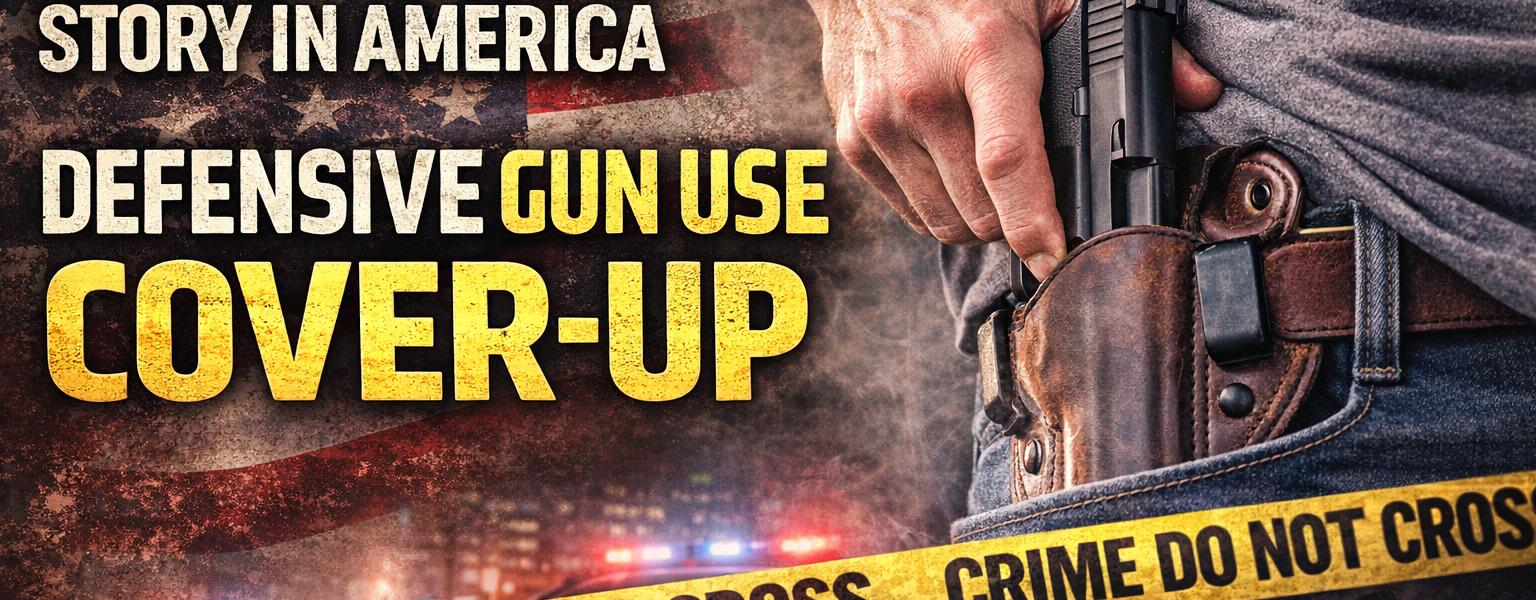
There is a category of news that rarely trends, rarely goes viral, and almost never becomes the focus of national debate. Not because it isn’t happening—but because it doesn’t fit the narrative.
That category is defensive gun use.
For years, Americans have been told a one-sided story about firearms: that they are primarily instruments of violence, chaos, and tragedy. But beneath that surface is a far less discussed reality—one where legally owned firearms are used every day to prevent crimes, stop assaults, and save lives.
And the data, even when coming from mainstream institutions, quietly confirms it.
The Centers for Disease Control and Prevention has acknowledged that defensive gun use occurs far more often than many assume. Estimates vary widely, but even conservative interpretations suggest significant numbers. Meanwhile, research from criminologist Gary Kleck has pointed to figures ranging from hundreds of thousands to potentially millions of defensive uses annually.
Let that sink in.
Even if you take the lowest credible estimate, you are still looking at hundreds of thousands of instances each year where a firearm is used not to harm—but to protect.
So why don’t we hear about it?
Because most of these incidents don’t fit the script.
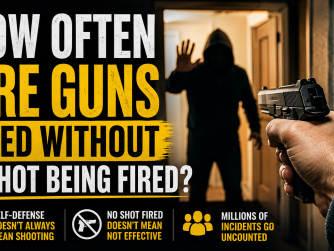
They don’t involve mass casualties. They don’t produce shocking footage. Often, no shots are even fired. A would-be attacker sees a firearm and flees. A home intruder backs off. A robbery is stopped before it escalates. These are quiet victories—resolved in seconds, documented briefly in local police logs, and then forgotten.
They don’t drive ratings. They don’t fuel outrage. And so they disappear.
What we’re left with is a distorted perception: a public that is constantly exposed to the worst possible outcomes involving guns, while rarely seeing the everyday reality of lawful citizens using them responsibly.
This imbalance matters.
Because policy is shaped by perception. And perception, in this case, is being built on incomplete information.
If millions—or even hundreds of thousands—of Americans are using firearms defensively each year, then gun ownership is not simply a political talking point. It is a functional tool of personal security. It is the difference, in many cases, between victimhood and survival.
And yet, the conversation rarely acknowledges that.
Instead, defensive gun use is treated as anecdotal, fringe, or statistically insignificant—despite evidence suggesting the opposite. Studies that highlight these uses are often dismissed, debated endlessly, or simply ignored, while far less frequent but more emotionally charged incidents dominate the national dialogue.
This isn’t just a media gap. It’s a narrative filter.
When one side of reality is amplified and the other is minimized, the result isn’t just bias—it’s misunderstanding.
And in this case, that misunderstanding has real consequences. It shapes how Americans view their own safety. It influences legislation that affects millions. It determines whether people feel empowered to protect themselves—or dependent on systems that may not arrive in time.
None of this is to deny that gun violence exists or that it should be addressed seriously. But a serious conversation requires a full picture.
Right now, we don’t have that.
What we have is a country where defensive gun use may be happening hundreds of thousands of times each year—and yet remains one of the least discussed realities in modern media.
That silence is not accidental. And it’s not harmless.
Because the truth is simple, even if it’s inconvenient:
For many Americans, gun ownership isn’t about aggression. It’s about the ability to stand their ground when no one else is coming.
And that story—whether acknowledged or not—is playing out every single day.