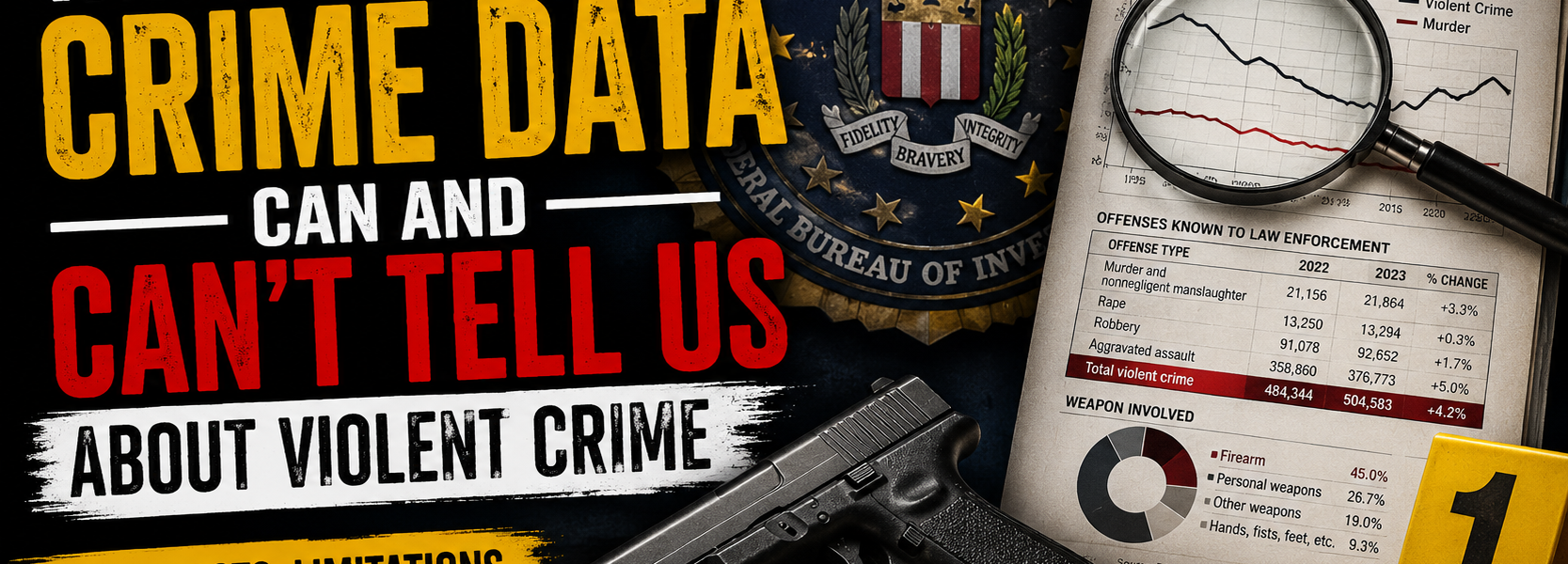
Every time a major crime story makes national headlines, someone eventually says, “The FBI data proves…” What follows is often a sweeping conclusion about guns, crime, or public safety.
The problem is that the FBI’s crime data is a valuable tool, but it is not a crystal ball. It provides important information, yet it also has limitations that are frequently overlooked in political debates.
Understanding what the FBI’s data can and cannot tell us helps separate evidence from rhetoric.
What the FBI Tracks
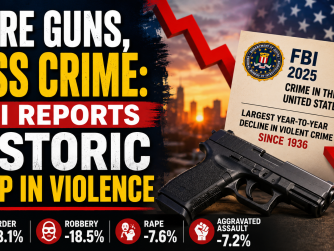
The FBI collects crime information from thousands of local, county, state, tribal, and federal law enforcement agencies through its National Incident-Based Reporting System (NIBRS).
The agency tracks crimes such as:
- Murder and non-negligent manslaughter
- Robbery
- Aggravated assault
- Burglary
- Motor vehicle theft
- Sexual assault
- Weapon offenses
This data allows researchers to identify trends over time and compare crime rates across different regions.
What the Data Can Tell Us
Violent crime rises and falls over time.
One of the FBI’s greatest strengths is showing long-term trends.
For example, violent crime declined dramatically from the early 1990s through much of the 2010s before increasing during the pandemic era. Looking at decades instead of isolated years provides a much clearer picture than reacting to a single news cycle.
Crime varies dramatically by location.
National averages can hide enormous differences.
Some communities experience very little violent crime, while others struggle with persistent gang violence or repeat offenders. Two cities in the same state may have vastly different crime rates.
Most gun owners never commit violent crimes.
While the FBI records crimes involving firearms, the overwhelming majority of Americans who legally own firearms never appear in these statistics.
Millions of lawful gun owners safely own, carry, hunt, compete, and defend themselves without ever committing a violent offense.
What the Data Cannot Tell Us
It cannot prove that one gun law caused crime to rise or fall.
This is one of the biggest mistakes made in public debate.
Crime is influenced by numerous factors, including:
- Economic conditions
- Drug trafficking
- Policing strategies
- Prosecution policies
- Demographics
- Gang activity
- Incarceration rates
If crime rises after a new law takes effect, that does not automatically mean the law caused the increase. Likewise, a decline in crime does not necessarily prove a particular policy was responsible.
Correlation is not causation.
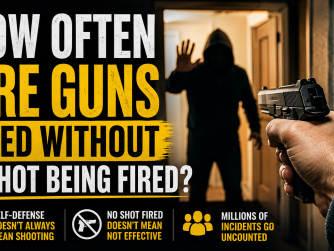
It does not measure defensive gun use.
The FBI records crimes reported to law enforcement.
It generally does not record the countless situations in which a lawful gun owner displays a firearm and a criminal flees without shots being fired. Many defensive encounters never become criminal investigations and therefore never appear in FBI crime statistics.
Researchers continue to debate how often defensive gun use occurs because different studies produce different estimates.
It doesn’t capture every crime.
Crime data depends on reporting.
Not every crime is reported to police, and not every police agency reports identical information every year. Although participation has improved under NIBRS, gaps still exist, especially during the transition from older reporting systems.
Why Context Matters
Numbers alone rarely tell the whole story.
Suppose one city experiences a spike in violent crime. Was it driven by a handful of repeat offenders? Organized gangs? Domestic violence? Drug trafficking?
The raw numbers cannot answer those questions by themselves.
Likewise, if another city reports lower crime after expanding concealed carry rights, the FBI data alone cannot establish that the policy caused the decline.
Responsible analysis requires looking beyond the headline.
The Bottom Line
The FBI’s crime statistics are among the best public resources available for tracking crime trends in the United States. They provide valuable insight into where crime is occurring and how it changes over time.
But they have limits.
They cannot settle every policy debate, measure every defensive use of a firearm, or prove that a single law caused crime to rise or fall.
For Second Amendment advocates, the lesson is straightforward: use FBI data because it is one of the strongest sources available, but don’t ask it to answer questions it wasn’t designed to answer. The strongest arguments are built not on isolated statistics, but on careful analysis, historical context, and an honest understanding of what the evidence does—and does not—show.