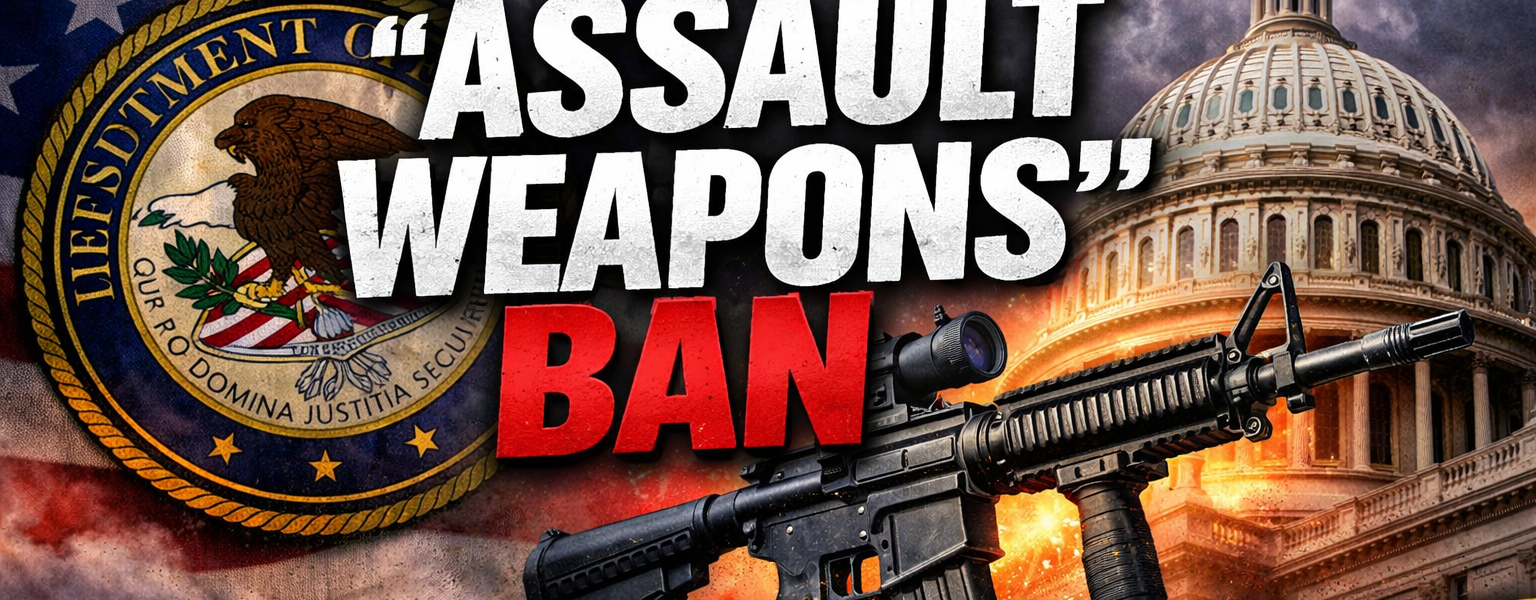
A new legal battle over gun rights is unfolding in the nation’s capital as the U.S. Department of Justice has filed a lawsuit challenging Washington, D.C.’s ban on so-called “assault weapons,” including AR-15-style rifles.
The DOJ DC gun ban challenge marks a significant escalation in the ongoing national debate over the scope of the Second Amendment, particularly as it relates to firearms that are widely owned by civilians.
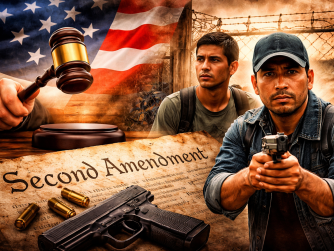
At the center of the case is a core constitutional question: can the government prohibit firearms that are commonly used by law-abiding citizens?
The “Common Use” Argument Returns
The DOJ’s argument is expected to rely heavily on precedent set by the Supreme Court in District of Columbia v. Heller and later reinforced in New York State Rifle & Pistol Association v. Bruen. These rulings established that the Second Amendment protects firearms that are in “common use” for lawful purposes such as self-defense.
AR-15-style rifles are among the most widely owned firearms in the United States, with estimates placing millions in circulation. Supporters of the DOJ’s position argue that this widespread ownership places such rifles squarely within the category of constitutionally protected arms.
The DOJ DC gun ban challenge could therefore become a major test of how far local governments can go in restricting access to these types of firearms.
Local Authority vs Federal Interpretation
Washington, D.C. officials have long defended their gun laws as necessary for public safety, particularly in densely populated urban environments. The city’s restrictions are part of a broader trend among certain jurisdictions to regulate or ban specific categories of firearms based on their features.
However, the DOJ’s move signals a growing willingness at the federal level to challenge those restrictions when they are believed to conflict with constitutional protections.
The DOJ DC gun ban challenge raises broader questions about the balance of power between local governments and federal constitutional standards. If successful, the case could limit the ability of cities and states to enact similar bans in the future.
A Potential Turning Point for Gun Policy
Legal analysts suggest that the outcome of this case could have nationwide implications. A ruling in favor of the DOJ may reinforce the “common use” standard and make it more difficult for jurisdictions to justify bans on widely owned firearms.
On the other hand, if the courts uphold D.C.’s law, it could provide a roadmap for other cities seeking to implement similar restrictions.
Either way, the DOJ DC gun ban challenge is likely to become a closely watched case in the broader conversation about gun rights, public safety, and constitutional limits.
What Comes Next
The case will now move through the federal court system, where both sides are expected to present extensive arguments grounded in constitutional law, public safety data, and historical precedent.
As courts continue to interpret recent Supreme Court rulings, cases like this one are shaping the future of Second Amendment law in real time.
For now, the DOJ DC gun ban challenge represents the latest front in a legal landscape that remains both highly contested and deeply consequential.