Everyone’s heard the argument. Stricter gun laws should mean less crime.
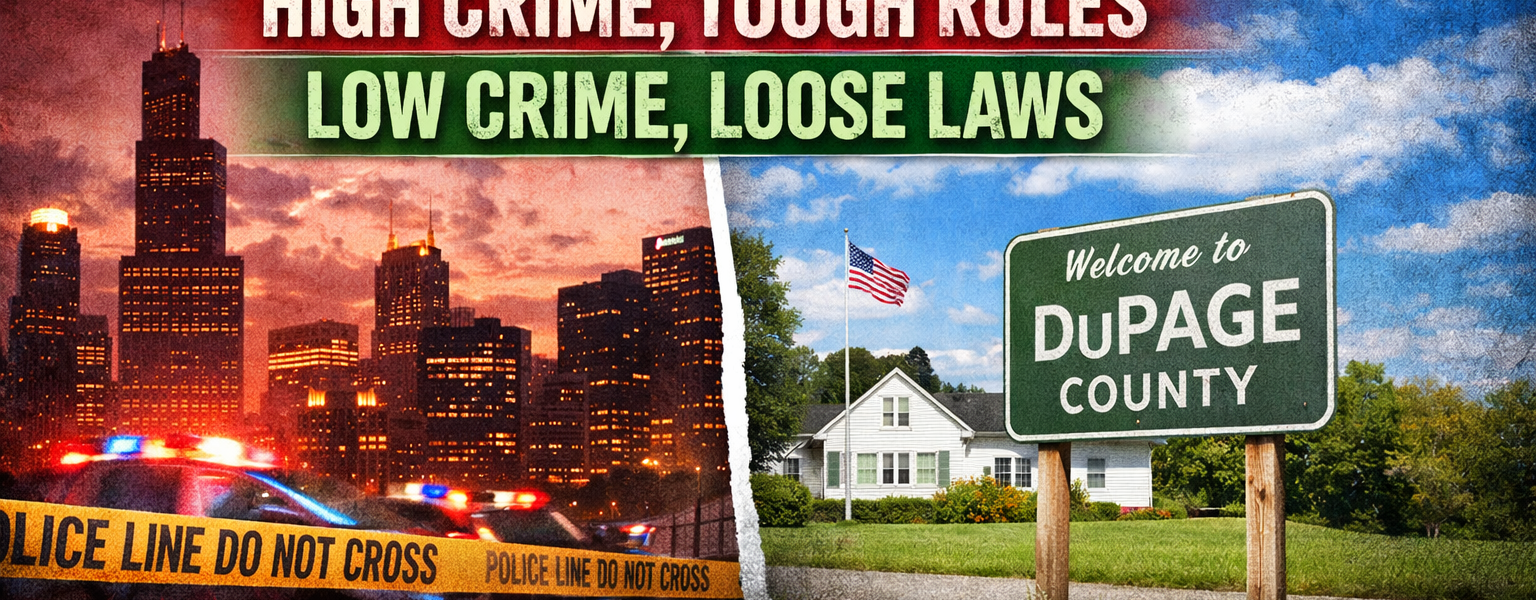
On paper, Chicago should be one of the safest cities in America. It has some of the toughest gun laws in the country, on top of already strict Illinois regulations. Background checks, waiting periods, licensing requirements, and red flag laws are all in place.
And yet, year after year, the city continues to struggle with high levels of gun violence.
In 2023, Chicago saw over 600 homicides, most involving firearms. Just a couple years earlier, that number climbed above 800. The city routinely accounts for a large share of Illinois’ murders, despite being just one part of the state.
Now step just outside Chicago.
Counties like DuPage, Lake, and Will follow the same state laws, but without the same level of local restrictions or urban density. The difference is hard to ignore. Many of these counties see a fraction of the homicides, often in the single digits or low double digits each year.
Per capita, the gap is not small. It is dramatic.
So what is going on?
One piece of the puzzle is where crime guns actually come from. Federal tracing data has shown that many firearms used in Chicago crimes are not legally purchased by the people using them. They are often obtained through theft, straw purchases, or black market networks.
In other words, the people committing violent crimes are not standing in line filling out paperwork.
But law abiding residents are.
If you live in or near a high crime neighborhood, legally owning a firearm can mean navigating a maze of forms, fees, and waiting periods. For many, that raises a tough question. Why are the people following the rules the ones facing the most obstacles?
Of course, Chicago is not identical to its surrounding counties. It is bigger, denser, and deals with challenges like concentrated poverty and gang activity that suburban areas do not face at the same scale.
But that is exactly what makes the comparison interesting.
If strict laws alone were the answer, you would expect the most regulated areas to be the safest. Instead, you often see the opposite pattern. The rules are tighter, but the outcomes do not match the intent.
That does not mean laws do not matter. It means they are only one part of a much bigger picture.
Because at the end of the day, there is a simple reality that is hard to ignore.
The people following the rules are not the ones breaking them.