Gun control debates often boil down to a simple claim: fewer guns mean less crime. But the real world is more complicated.
Several countries have enacted sweeping firearm restrictions over the past few decades. While these laws often reduced the number of legally owned firearms, they did not eliminate violent crime. In many cases, criminals adapted by turning to other weapons or obtaining firearms through illegal channels.
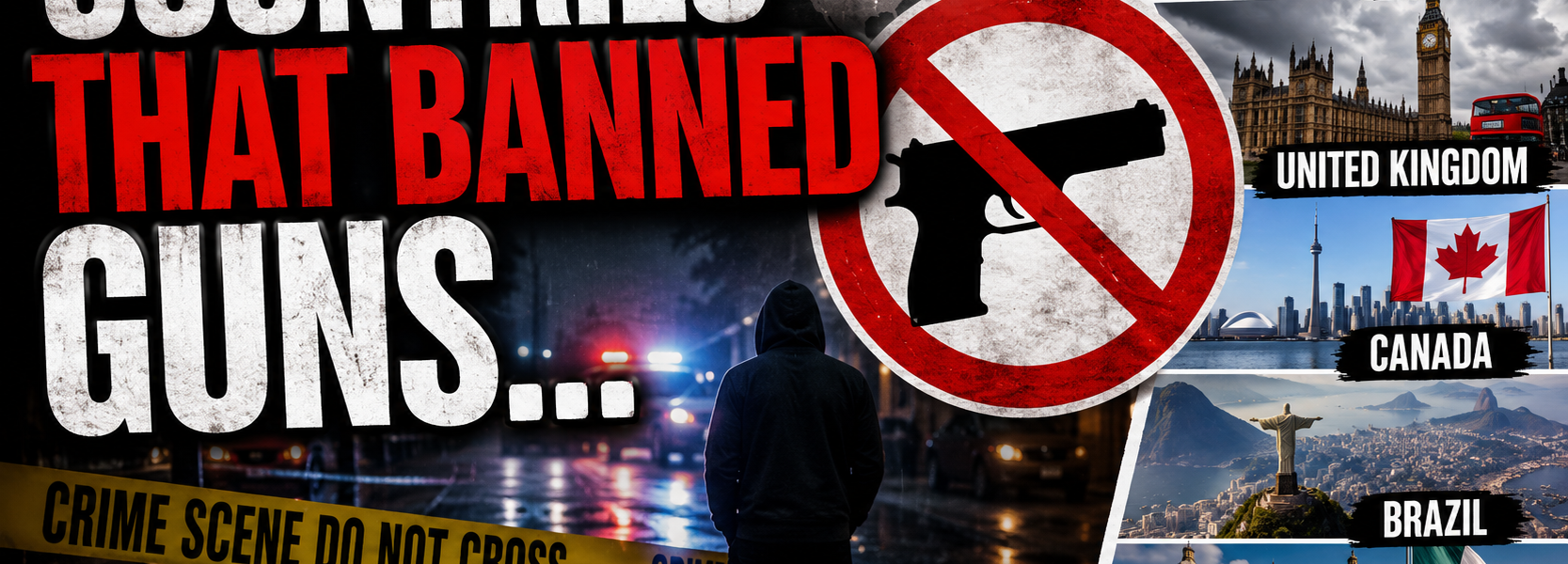
Here is a look at what happened in several countries after major gun restrictions were introduced.
Australia
Australia dramatically tightened its gun laws after the 1996 Port Arthur massacre. The government banned many semi-automatic rifles and shotguns and launched a mandatory buyback program that collected hundreds of thousands of firearms.
Supporters point to the absence of another mass shooting on the same scale. However, violent crime did not disappear.
In the years that followed, Australia continued to experience homicides, armed robberies, home invasions, and gang-related shootings. More recently, authorities have warned about the growing use of illegally imported firearms by organized crime groups.
Knife crime has also remained a concern in several Australian cities.
United Kingdom
The United Kingdom has some of the strictest gun laws in the Western world. Following the 1996 Dunblane school shooting, Parliament effectively prohibited private ownership of handguns.
Despite the restrictions, violent crime persisted.
Police have spent years combating knife crime, particularly in London and other major cities. Criminals have increasingly used machetes, large knives, and improvised weapons in assaults. The British government has responded with knife surrender programs, restrictions on blade sales, and tougher sentencing for repeat offenders.
The country has also experienced occasional shootings involving illegally possessed firearms.
Canada
Canada has steadily expanded firearm restrictions over the past several years, including freezing handgun transfers and prohibiting many rifle models.
Yet law enforcement officials have repeatedly stated that many guns used in violent crimes are illegally trafficked rather than purchased by licensed gun owners.
Canadian cities continue to struggle with gang violence, particularly involving organized criminal networks operating across the U.S.-Canada border.
Brazil
Brazil spent years tightening firearm ownership while battling some of the world’s highest homicide rates.
Despite restrictive laws, organized crime flourished and illegal firearms remained widespread.
In 2019, the Brazilian government moved in the opposite direction by making legal gun ownership easier for many citizens. The long-term effects of those policy changes remain debated, with analysts pointing to multiple factors influencing homicide trends, including policing, organized crime activity, and demographics.
Mexico
Mexico has some of the strictest civilian gun laws in the world. Most citizens may legally purchase firearms only through a single government-operated gun store under tightly regulated conditions.
Despite these restrictions, drug cartels possess military-grade weapons, including automatic rifles, explosives, and armored vehicles obtained through illegal trafficking.
Mexico continues to experience high levels of organized crime violence despite its restrictive firearm laws.
The Common Pattern
One theme appears repeatedly across countries with strict gun laws.
Restricting legal ownership does not necessarily prevent criminals from acquiring weapons illegally. Where firearms become harder to obtain, offenders often substitute other weapons, including knives, machetes, or improvised weapons. In areas dominated by organized crime, illegal firearm trafficking frequently continues despite strict regulations.
At the same time, many researchers argue that gun laws can reduce certain types of firearm deaths or influence particular categories of violence. Because crime trends are shaped by many factors, including policing, poverty, demographics, drug markets, and sentencing policies, it is difficult to attribute changes in violence to gun laws alone.
The Bottom Line
The experiences of Australia, the United Kingdom, Canada, Brazil, and Mexico suggest that no country has found a simple legislative solution to violent crime.
Whether one supports or opposes stricter firearm regulations, the evidence shows that criminals often adapt to changing laws. The broader debate is not simply about whether guns are available, but about how societies address violent offenders, organized crime, mental health, policing, and the rule of law.
The lesson from around the world is that reducing violence is more complex than passing a gun ban. Any serious discussion of public safety should consider the full range of evidence rather than assuming a single policy can solve a multifaceted problem.