As millions of families prepare for a new school year, they’re checking supply lists, packing lunches, and getting children ready for the classroom. But some parents are asking a surprising question: could an innocent lunch or a child’s imagination land their son or daughter in trouble?
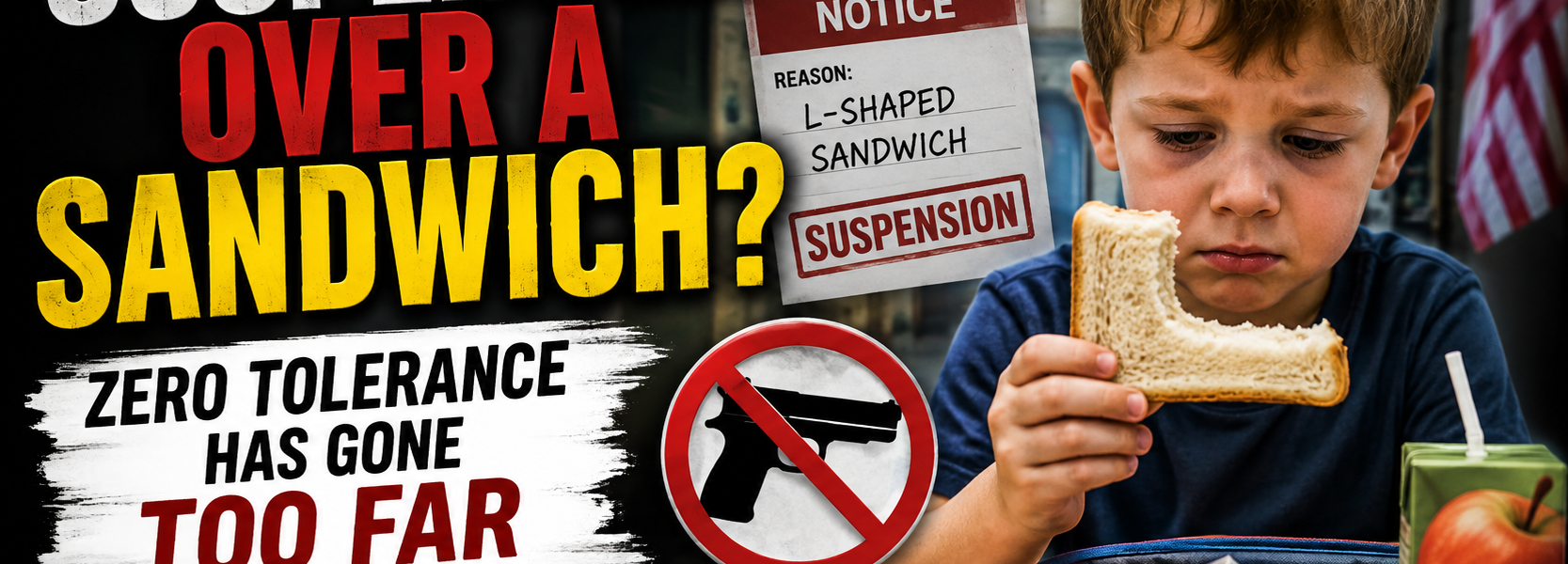
That concern is growing after reports that a six-year-old Georgia student was suspended for biting his sandwich into an “L” shape and pretending it was a gun. According to reports, the child had previously been disciplined for pointing a water bottle at another student while making gun noises and for drawing a pilgrim hunting a turkey.
The child’s family says school officials ignored a critical fact: he is six years old and autistic. They argue the punishment failed to account for his developmental stage and blurred the line between innocent play and genuine misconduct.
The case has reignited criticism of zero-tolerance school discipline policies that many parents say have drifted far from common sense.
A Pattern of Punishing Play
The Georgia incident is hardly unique.
Over the past decade, similar stories have repeatedly made national headlines:
- A seven-year-old Maryland student was suspended after biting a breakfast pastry into the shape of a gun.
- A five-year-old Pennsylvania child faced suspension for bringing a Hello Kitty bubble gun to school.
- Perhaps most striking, a three-year-old deaf boy was reportedly told that signing his own name in American Sign Language violated a school district’s weapons policy because the hand gesture resembled a gun.
Critics argue these cases demonstrate how rigid disciplinary rules can sometimes override judgment, particularly when dealing with very young children.
Where Is the Line?
Few would dispute that schools have an obligation to respond quickly to genuine threats. Student safety remains a top priority, and administrators routinely face difficult decisions.
The controversy arises when policies designed to stop violence are applied to situations that many parents see as harmless childhood behavior.
Young children often engage in imaginative play. They pretend sticks are swords, cardboard boxes are spaceships, and sandwiches become whatever their imagination creates. Child development experts generally note that young children are still learning the distinction between fantasy and real-world consequences.
The Georgia family’s concerns go beyond the suspension itself.
According to the boy’s mother, her son began believing he was “a bad kid” after repeatedly being disciplined.
For many parents, that’s the real cost of overly rigid policies: children who leave school feeling labeled rather than taught.
The Bigger Debate
Critics say these incidents also reflect a broader cultural shift in how schools approach anything associated with firearms, even when no actual weapon is present.
They argue that artwork depicting historical hunting scenes, imaginary games, or family hunting traditions are increasingly viewed through the same lens as genuine safety threats.
Supporters of zero-tolerance policies counter that schools cannot afford to ignore behavior that could make other students uncomfortable or normalize violent imagery. They argue that consistency helps prevent more serious problems from developing later.
Calls for More Common Sense
Organizations advocating school policy reform have pushed for giving administrators greater discretion instead of requiring automatic punishment for harmless incidents. Some states have even considered so-called “Pop-Tart Bills,” designed to prevent students from being disciplined over food or toys that vaguely resemble firearms but pose no actual threat.
As students head back to class this fall, the debate is likely to continue.
The question facing educators isn’t whether schools should take safety seriously. Most agree they should.
The question is whether common sense should play a larger role when the “weapon” in question is little more than a sandwich in the hands of a first grader.