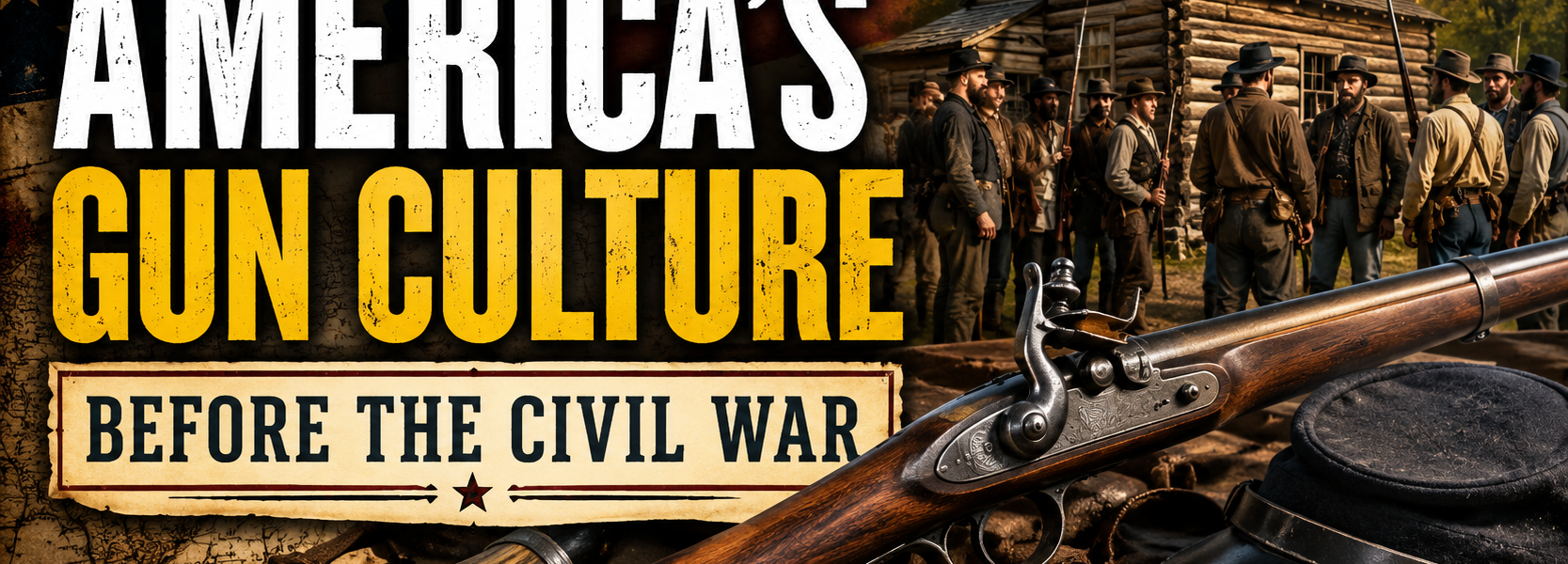
For many Americans today, the right to keep and bear arms is closely tied to the Second Amendment. But long before the Civil War, firearms were already woven into everyday life across the United States. They were tools for survival, symbols of self-reliance, and, in many places, an expected part of citizenship.
Understanding America’s early gun culture helps explain why the Second Amendment was written the way it was and why debates over firearms continue more than two centuries later.
Guns Were Everyday Tools
In early America, firearms were not luxury items or political symbols. They were practical necessities.
Families used guns to hunt deer, turkey, rabbits, and other game that often supplied a significant portion of their food. Farmers protected livestock from wolves, bears, and predators. Travelers carried firearms for protection while journeying through sparsely populated regions.
Before refrigeration, supermarkets, and organized police departments, many Americans depended on firearms simply to provide food and security.
Militia Service Was Expected
The Founders viewed national defense very differently than Americans do today.
Instead of maintaining a massive standing army, many believed that free citizens should be prepared to defend their communities. Colonial and early state militia laws frequently required able-bodied men to report for service with their own firearms, ammunition, and equipment.
Militia musters were common events where citizens practiced drills, inspected equipment, and trained together.
This expectation heavily influenced the language of the Second Amendment.
Firearm Ownership Was Common
Although not every household owned a firearm, gun ownership was widespread throughout much of early America.
On the frontier, rifles were particularly valued for hunting and defense. In cities, muskets and pistols were more common. Blacksmiths and gunsmiths operated throughout the colonies and later the young republic, repairing existing firearms and building new ones.
American gunsmiths gradually developed distinctive designs, including the famed Kentucky long rifle, which became known for its accuracy.
Hunting Was a Way of Life
Long before hunting became primarily recreational, it was an essential skill.
Children often learned to shoot at a young age under family supervision. Successful hunters helped feed entire households, and many communities relied on game as an important food source.
Marksmanship was respected because it had practical value.
Firearms Were Also Part of Westward Expansion
As settlers moved west, firearms became even more important.
Remote settlements frequently lacked immediate military or law enforcement protection. Families often relied on themselves and their neighbors during emergencies.
Life on the frontier demanded self-sufficiency, and firearms were one part of that reality.
Gun Laws Existed Too
America before the Civil War was not without firearm regulations.
Many states prohibited carrying concealed weapons while openly carried firearms remained lawful. Some towns regulated the discharge of firearms within city limits for safety reasons. Certain locations restricted where guns could be brought, and storage rules sometimes existed in densely populated areas to reduce fire risks.
In other words, early America recognized both firearm ownership and certain regulations at the same time.
Firearms Came With Responsibility
Early American culture generally viewed firearm ownership as carrying responsibilities as well as rights.
Citizens were expected to maintain their firearms, practice safely, appear for militia service when required, and use deadly force only under circumstances recognized by law.
The idea of responsible ownership was deeply connected to concepts of citizenship and civic duty.
The Legacy Today
America’s gun culture did not begin with modern politics. It developed over generations in a country where firearms served practical purposes in daily life.
Whether used for hunting, militia service, personal protection, or frontier survival, guns occupied an important place in early American society long before the Civil War.
Modern debates over the Second Amendment often focus on today’s concerns, but understanding how firearms fit into the lives of early Americans provides valuable historical context. Regardless of where someone stands on current policy questions, it is difficult to understand the nation’s founding without recognizing the significant role firearms played in everyday life during the first decades of the United States.