America’s gun owners just got one of the clearest signals yet that the Bureau of Alcohol, Tobacco, Firearms and Explosives may finally be changing course.
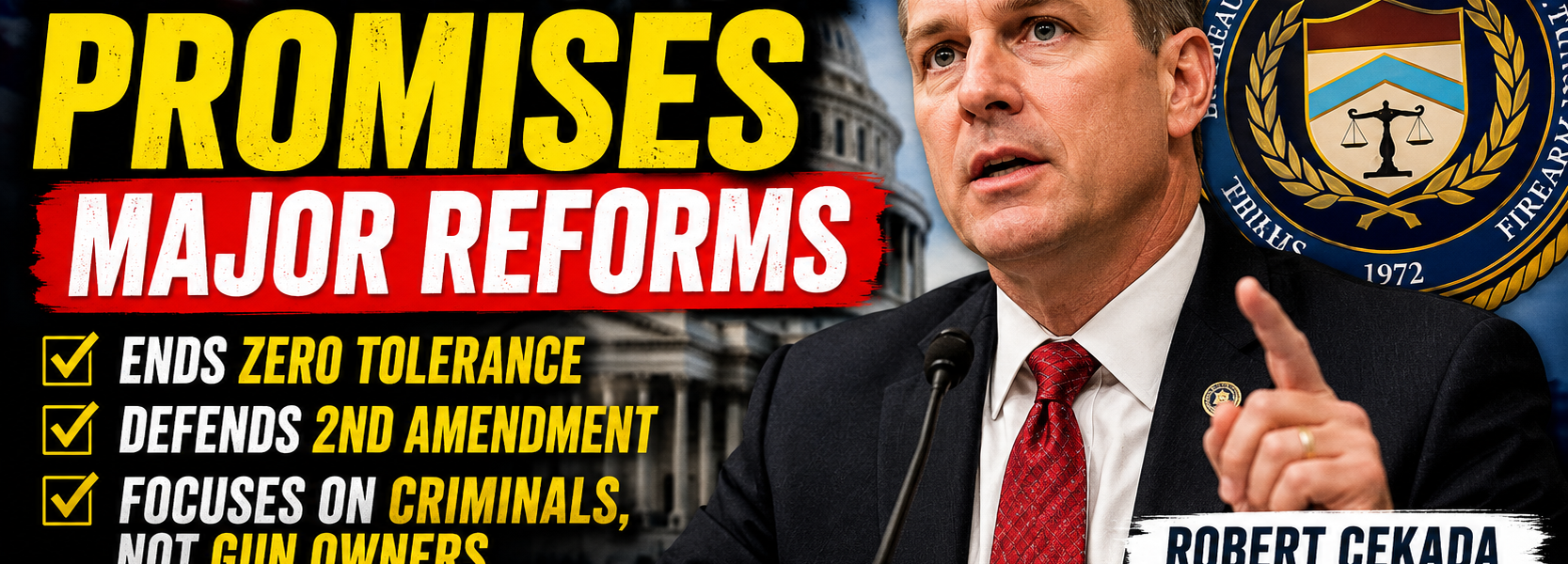
During a heated House Oversight hearing on May 14, newly confirmed ATF Director Robert Cekada sharply criticized several Biden-era policies, defended the Second Amendment in unusually direct language, and promised reforms aimed at restoring trust with lawful gun owners and firearms dealers.
The hearing focused on the Tiahrt Amendment, a federal protection that restricts the ATF from handing firearm trace data to outside groups except for legitimate criminal investigations. Republicans on the committee accused the Biden-era ATF of repeatedly abusing or mishandling sensitive firearms information in ways that appeared politically motivated.
Subcommittee Chairman Clay Higgins accused the agency of helping anti-gun organizations create maps of firearm dealers and using aggressive “zero tolerance” enforcement policies to target lawful gun stores over paperwork violations rather than focusing on violent criminals.
But it was Cekada’s testimony that caught the attention of the firearms community.
“We don’t prevent violent crime by threatening gun owners and law abiding citizens,” Cekada said during the hearing. Instead, he argued, violent offenders and traffickers should be the true focus of federal enforcement.
In one of the most notable moments, Cekada openly stated that the Biden administration’s controversial “engaged in the business” firearm dealer rule had virtually no measurable public safety impact.
“It showed us zero impact,” he testified.
That rule dramatically expanded who could be considered a federally regulated firearms dealer, raising fears that ordinary Americans selling personal firearms could face federal scrutiny or criminal penalties.
Cekada also announced that the ATF has officially revoked the Biden-era “zero tolerance” policy that many gun dealers argued was weaponized to shut down small firearm businesses over minor clerical mistakes. According to the director, the agency is now attempting to rebuild relationships with Federal Firearms License holders rather than treating them as adversaries.
Perhaps most striking was Cekada’s blunt defense of the Second Amendment itself.
When asked by Rep. Eli Crane how he interprets the amendment, Cekada stated that America’s founders intended citizens to have the means to defend themselves not only from criminals, but from “a tyrannical government.”
That kind of language is rarely heard from the head of the ATF.
Cekada also accused the previous Justice Department of failing to aggressively prosecute cartel-linked gun trafficking cases, claiming Arizona agents presented more than 250 trafficking cases that federal prosecutors declined to pursue. He compared the situation to the disastrous “Fast and Furious” scandal, where firearms were tracked into cartel hands with catastrophic consequences.
Gun rights advocates remain cautious. Many remember years of regulatory expansion, aggressive dealer crackdowns, pistol brace rules, and growing fears surrounding federal firearm databases.
Still, Cekada’s testimony suggests a dramatic philosophical shift may now be underway inside the ATF: away from treating lawful gun owners as suspects and toward focusing enforcement on violent criminals and organized trafficking networks instead.
For millions of Americans concerned about the future of the Second Amendment, that change cannot come soon enough.