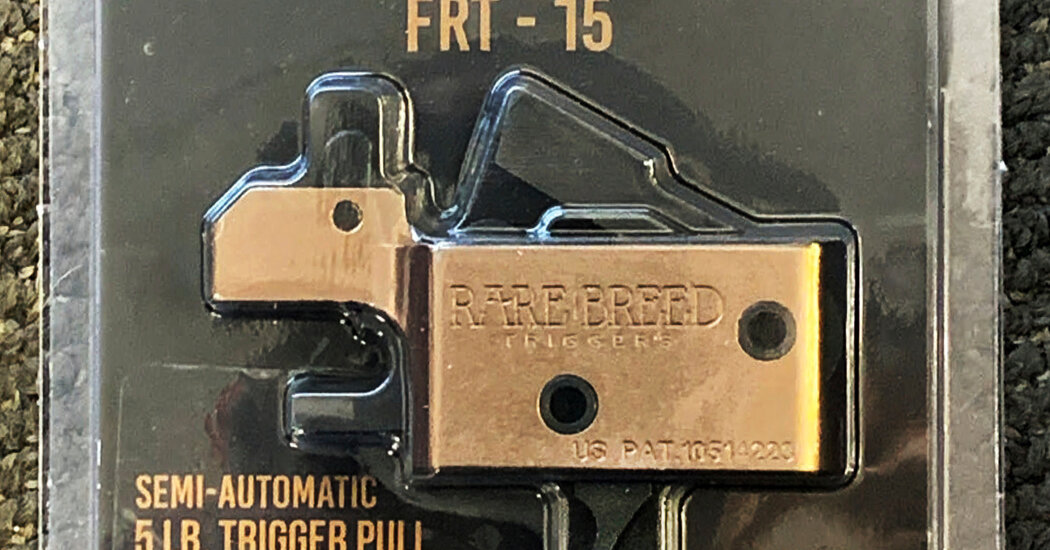
In a move that has reignited the national gun debate, a coalition of Democrat-led states has filed a lawsuit against the Biden DOJ’s recent decision to return thousands of forced-reset triggers (FRTs) to gun owners. These devices, which effectively increase the firing rate of semi-automatic rifles, were previously deemed illegal by the Bureau of Alcohol, Tobacco, Firearms and Explosives (ATF). Now, with the DOJ walking back that stance, the political and legal battlelines are sharply drawn.
What Are Forced-Reset Triggers?
FRTs are mechanical devices that allow a rifle to fire at a much higher rate by forcing the trigger to reset quickly after each shot. While still requiring one trigger pull per round, the design blurs the line between semi-automatic and fully automatic fire. Under the Trump administration’s current DOJ, these triggers are no longer classified as machine guns, which prompted the return of nearly 12,000 previously confiscated units.
The Lawsuit: States Push Back
At the heart of the lawsuit, filed by 15 states including New York, California, and Illinois, is the claim that the federal government is overstepping its authority and undermining state-level gun control laws. State attorneys general argue that returning the FRTs without consultation violates their ability to enforce their own firearms restrictions and poses a threat to public safety.
“This is not about the Second Amendment; it’s about respecting the rule of law and our right to protect our communities,” said New York Attorney General Letitia James. Critics, however, see the move as a politically charged attack on lawful gun owners and a direct challenge to the Trump-aligned federal approach to firearms.
A Symbolic Fight Over Federalism and Gun Rights
Gun rights advocates have hailed the DOJ’s decision as a major victory. Texas Gun Rights’ Chris McNutt called it “a direct result of refusing to compromise on our constitutional rights.” The National Rifle Association and other pro-gun organizations have pointed to the lawsuit as yet another example of blue states attempting to criminalize otherwise lawful behavior.
For many, this battle goes beyond the technical classification of FRTs. It represents a broader struggle over who gets to define the limits of the Second Amendment—Washington, D.C., or the individual states. In this sense, the legal outcome could have far-reaching implications not just for trigger devices, but for a host of firearm accessories and modifications.
Political Implications Heading Into 2025
The lawsuit also comes as Donald Trump campaigns on a staunchly pro-Second Amendment platform. His allies in Congress have already begun mobilizing legislation to limit the ATF’s rulemaking power, citing the agency’s previous overreach on pistol braces and bump stocks. Expect gun rights to take center stage in upcoming political debates as states press the courts to intervene.