For decades, movies, television, and political debates have shaped how many Americans think about firearms. The problem is that many of the most common beliefs simply aren’t true. Here are ten of the biggest myths.
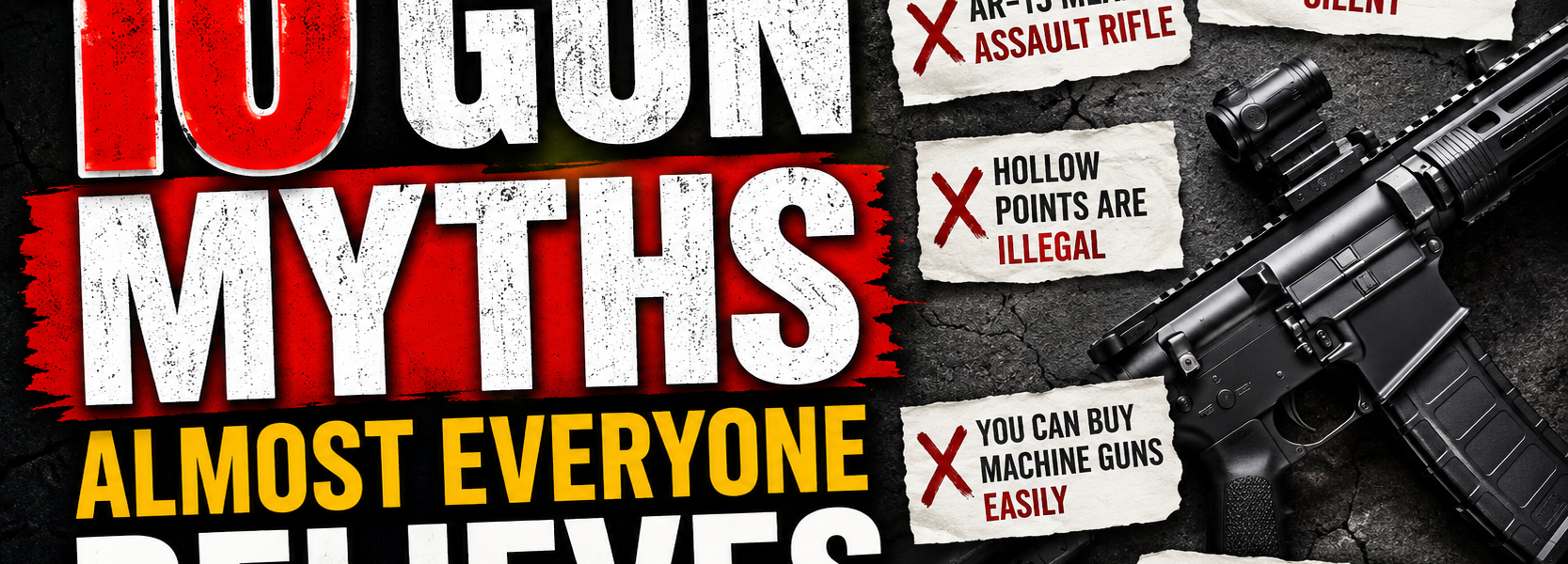
1. “AR” in AR-15 Stands for “Assault Rifle”
This is probably the most widespread misconception.
The “AR” actually stands for ArmaLite, the company that developed the original rifle in the 1950s. It does not stand for “assault rifle” or “automatic rifle.”
Civilian AR-15s are semiautomatic firearms, meaning one trigger pull fires one round.
2. Suppressors Make Guns Silent
Hollywood has convinced millions that suppressors turn gunfire into a quiet “pew.”
In reality, suppressors simply reduce the sound. Most suppressed firearms are still loud enough to require hearing protection, especially with supersonic ammunition.
Think “lawn mower” rather than “whisper.”
3. Hollow-Point Bullets Are Illegal
Many people believe hollow points are banned because they’re supposedly “extra deadly.”
In fact, they’re legal for civilian ownership in most states and are commonly recommended by law enforcement and self-defense instructors.
One reason is that they are designed to reduce the risk of over-penetration, which can help lessen the chance of striking unintended bystanders.
4. You Can Buy a Machine Gun at Any Gun Store
Not legally.
Machine guns capable of continuous fire with one trigger pull have been heavily regulated under federal law for decades. In general, civilians may only possess certain machine guns that were lawfully registered before 1986, subject to extensive federal requirements and, in some states, they are prohibited entirely.
The vast majority of firearms sold today are semiautomatic.
5. Bigger Caliber Always Means More Powerful
Not necessarily.
A larger bullet diameter doesn’t automatically translate into greater energy or effectiveness. Bullet design, velocity, barrel length, and intended use all play important roles.
Different calibers are optimized for different purposes.
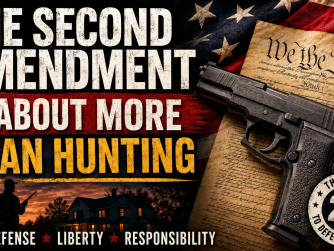
6. The Second Amendment Was Written for Hunting
The historical record says otherwise.
While hunting was common in early America, the Second Amendment refers to “the right of the people to keep and bear Arms.” Historians generally agree that its original context included personal defense, militia service, and concerns about centralized government power, alongside other lawful uses of firearms.
7. Gun Owners Are Mostly Older Rural Men
While that stereotype still exists, firearm ownership has broadened significantly in recent years.
Women, younger adults, suburban residents, and first-time buyers have all contributed to increased firearm ownership across a wide range of demographics.
8. Most Guns Used in Crimes Are Stolen From Gun Stores
Actually, thefts from private vehicles and homes account for a large share of stolen firearms reported each year.
Gun store burglaries do occur, but they represent a smaller portion of the total number of firearms reported stolen.
9. You Don’t Need Training Because Guns Are Simple
Owning a firearm responsibly involves far more than knowing how to pull the trigger.
Safe storage, marksmanship, situational awareness, maintenance, and understanding applicable laws all require education and practice.
Even experienced shooters regularly seek additional training.
10. Every Gun Has to Be Registered
This surprises many people.
There is no nationwide federal gun registry for ordinary firearms in the United States. Some states require registration for certain or all firearms, while many others do not.
The rules depend entirely on where you live.
The Bottom Line
Whether someone supports broader gun rights or stricter gun laws, the debate is better served by accurate information than by misconceptions. Firearms are already a complicated subject. Separating fact from fiction helps everyone have a more informed conversation.