Chicago Mayor Brandon Johnson is learning the hard way that optics matter — especially when they come with a $30 million price tag.
After facing backlash for spending over $30,000 in campaign funds on hair and makeup, Johnson is now under renewed scrutiny for something far more consequential: a massive taxpayer-funded personal security operation that reportedly dwarfs even that of his predecessor.
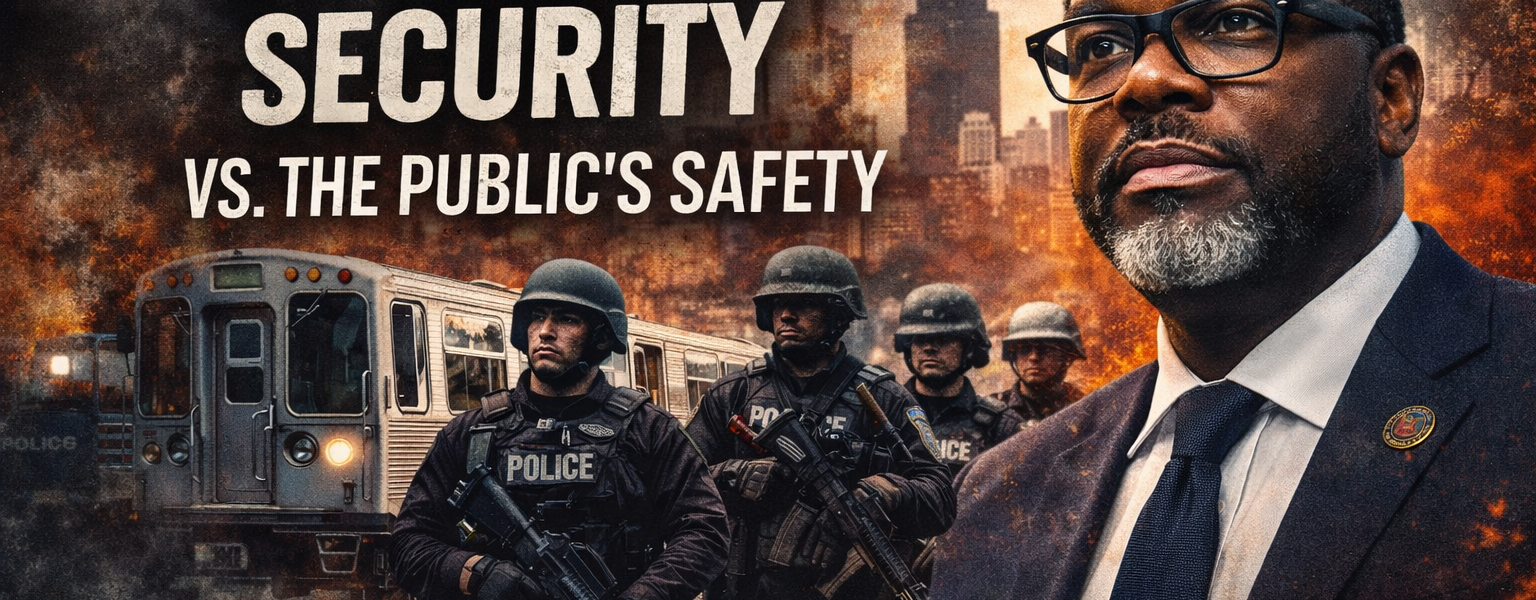
According to multiple reports, Johnson is protected by a police detail of up to 150 officers — a force comparable in size to a small military unit. The estimated annual cost? Roughly $30 million. That’s more than the budget of some entire city departments, and significantly higher than the resources allocated to protect everyday Chicagoans navigating one of the country’s most crime-challenged urban environments.
For comparison, former mayor Lori Lightfoot maintained a large but smaller security footprint, with around 90 officers tied to her protection. Even that drew criticism at the time, particularly as she simultaneously proposed cuts to the Chicago Police Department.
But Johnson’s approach takes the contrast even further.
While enjoying one of the most robust personal protection details in the country, the mayor has consistently advocated for reduced reliance on traditional policing, stricter gun control, and alternative public safety models that minimize law enforcement’s role. His policy vision calls for “reimagining policing,” shifting toward community-based approaches, and even eliminating tools like gang databases.
At the same time, violent crime on Chicago’s transit system has surged, with assaults and batteries reaching levels not seen in decades and continuing to climb into 2026. Yet the number of officers dedicated to securing the entire transit network remains lower than the force assigned to protect a single individual: the mayor himself.
That contradiction has not gone unnoticed.
Critics argue the situation exposes a glaring double standard: a political philosophy that questions policing for the public, paired with an expansive, heavily armed police presence for personal protection. Even leaders within Chicago’s police ranks have called out what they see as hypocrisy, noting the stark difference between rhetoric and reality.
Johnson, for his part, has blamed external factors — including out-of-state gun laws and federal enforcement failures — for Chicago’s ongoing crime challenges. But for many residents, those explanations ring hollow when compared to the visible imbalance in how safety resources are distributed.
Because at the end of the day, the message being sent is hard to ignore:
When it comes to public safety in Chicago, there appears to be one standard for the public — and another for the people in charge.