Despite ongoing concerns about crime, disorder, and safety in New York City’s transit system, state officials continue to classify it as a “sensitive place,” where law-abiding citizens are prohibited from carrying firearms for self-defense.
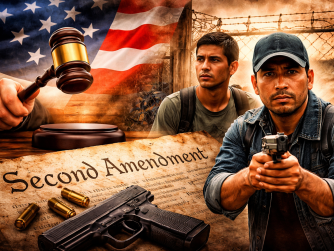
This designation has drawn renewed scrutiny following the U.S. Supreme Court’s 2022 decision in New York State Rifle & Pistol Association v. Bruen, which struck down New York’s discretionary carry licensing system and affirmed that the Second Amendment protects the right to carry a firearm outside the home for self-defense.
In its ruling, the Court acknowledged that firearms could still be restricted in certain “sensitive places,” such as schools, government buildings, legislative assemblies, polling locations, and courthouses. However, public transportation systems were not included among those examples.
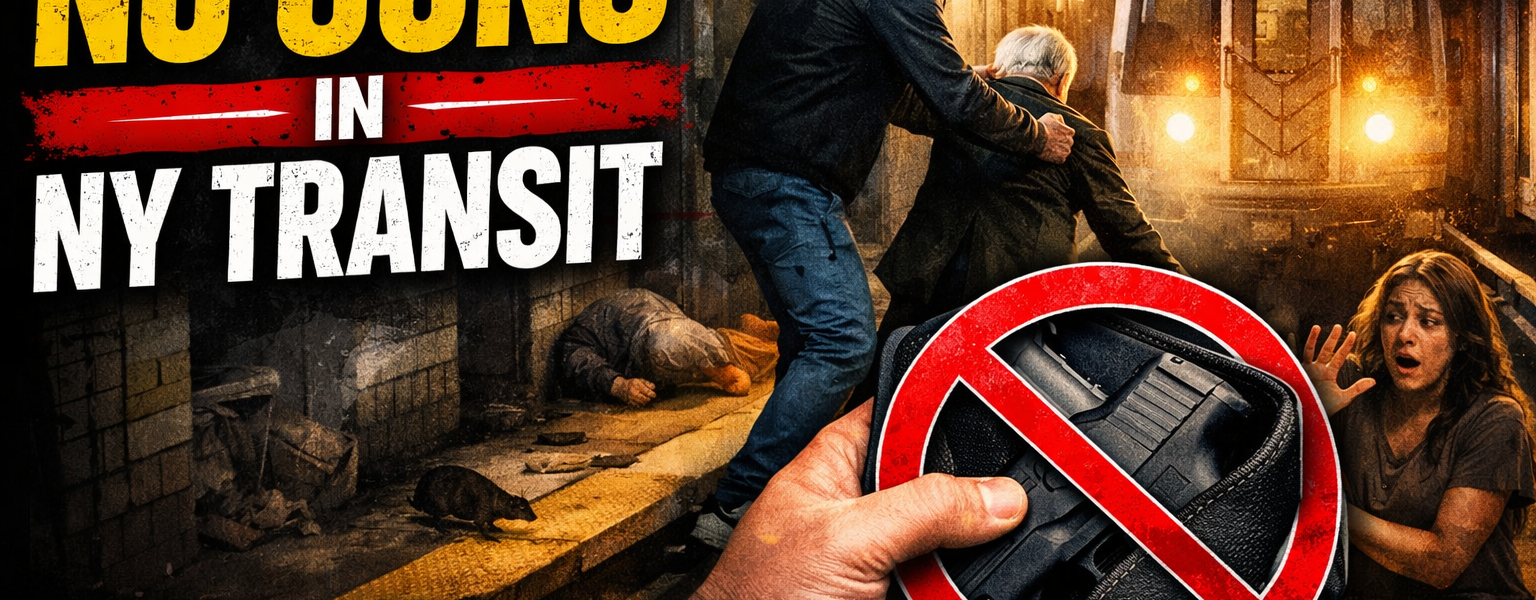
Following the decision, New York expanded its definition of “sensitive locations” through state law, including nearly all forms of public transit. Under New York Penal Law § 265.01-e, carrying a firearm in subways, buses, train cars, stations, airports, and related facilities is prohibited, even for licensed individuals.
Critics argue that this broad interpretation raises questions about whether the state is complying with the intent of the Supreme Court’s ruling. They also point to ongoing safety concerns within the transit system as evidence that such restrictions may leave individuals without practical means of self-defense.
Recent incidents have further fueled the debate. In one case reported by the New York Post, an 83-year-old U.S. Air Force veteran was pushed onto subway tracks at a Manhattan station and later died from his injuries. The alleged attacker was later apprehended at a homeless shelter.
Supporters of stricter gun laws maintain that limiting firearms in crowded public environments helps reduce the risk of violence and accidental harm. Opponents counter that prohibiting lawful carry in high-risk environments may leave individuals more vulnerable, particularly in areas where police presence is inconsistent.
Similar tensions are playing out beyond New York.
In Michigan, a licensed firearm holder involved in a self-defense shooting at Mott Community College’s Ballenger Fieldhouse was cleared of wrongdoing in the use of force. Surveillance footage and witness statements supported the conclusion that the individual had been attacked and acted in self-defense.
However, despite that determination, prosecutors later charged the individual for carrying a firearm in a designated “gun-free zone,” which under Michigan law includes certain athletic facilities. If convicted, the individual could face fines and a temporary suspension of their carry permit.
The case has raised broader questions about how gun-free zone laws are applied, particularly in situations where individuals successfully defend themselves against violent attacks.
At the center of these debates is an ongoing legal and policy question: how to balance restrictions on firearms in designated locations with the constitutional right to self-defense.
As courts continue to interpret the scope of the Second Amendment in the wake of Bruen, disputes over what qualifies as a “sensitive place” — and how those definitions are enforced — are likely to remain a central issue in gun policy discussions nationwide.