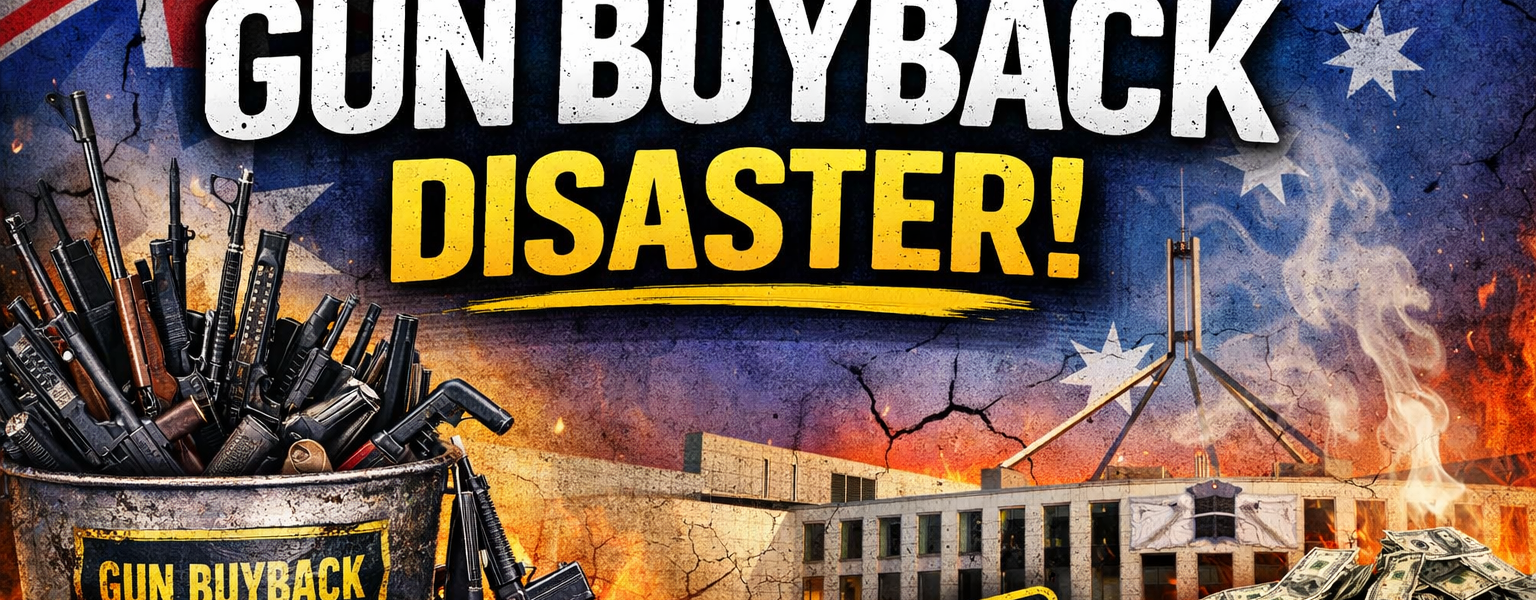
There was a time when politicians could announce a gun “buyback,” hold a press conference, and count on glowing headlines before anyone asked the obvious question: does this actually work?
Now, that illusion is cracking—and Australia is the latest example.
The Latest Grand Plan
In the aftermath of a tragic attack at Bondi Beach, Prime Minister Anthony Albanese’s government rushed out a familiar solution: a national gun buyback scheme. The pitch was predictable—swift action, strong leadership, and a promise of improved public safety.
But behind the headlines, the details told a different story.
The plan required:
- A massive cost-sharing agreement between federal and regional governments
- New legislation across multiple jurisdictions
- And a price tag estimated between $10–14 billion USD
All of this in the middle of a cost-of-living crisis where many citizens are already struggling.
The Problem No One Wants to Admit
Here’s where the whole thing starts to unravel.
Australia’s states and territories actually control gun laws. That means the federal government can propose sweeping national reforms—but it cannot enforce them without cooperation.
And that cooperation? It’s not happening.
- Multiple states have refused to sign on
- Others have raised serious concerns about cost and effectiveness
- Some leaders have outright rejected the premise entirely
One official put it bluntly: the plan does nothing to stop criminals or terrorists.
A Familiar Pattern
If this sounds familiar, it should.
Gun buybacks consistently run into the same issues:
- Law-abiding citizens comply
- Criminals do not
- Costs spiral out of control
- Measurable impact remains unclear
Even studies of Australia’s original 1996 buyback found little evidence of significant effects on homicide or suicide rates.
Yet decades later, the same policy is rolled out again—just with a higher price tag.
When Reality Sets In
As deadlines passed, the cracks became impossible to ignore.
- States walked away
- Costs ballooned
- Details remained vague
- And public support softened under economic pressure
What was supposed to be a bold national initiative is now being openly described—even by commentators within Australia—as a “massive failure.”
The Bigger Issue
The deeper problem isn’t just this one policy. It’s the mindset behind it.
Gun buybacks offer something politicians love:
- Immediate headlines
- Moral signaling
- The appearance of action
But they avoid the harder questions:
- How do criminals actually obtain weapons?
- What policies measurably reduce violence?
- And why do these programs keep failing to deliver results?
The Takeaway
Australia was once held up as the global model for gun buybacks. Now, even there, the reality is harder to ignore.
When the bill comes due—literally—support starts to disappear.
Because at some point, people begin to ask:
Is this about safety… or just the appearance of doing something?