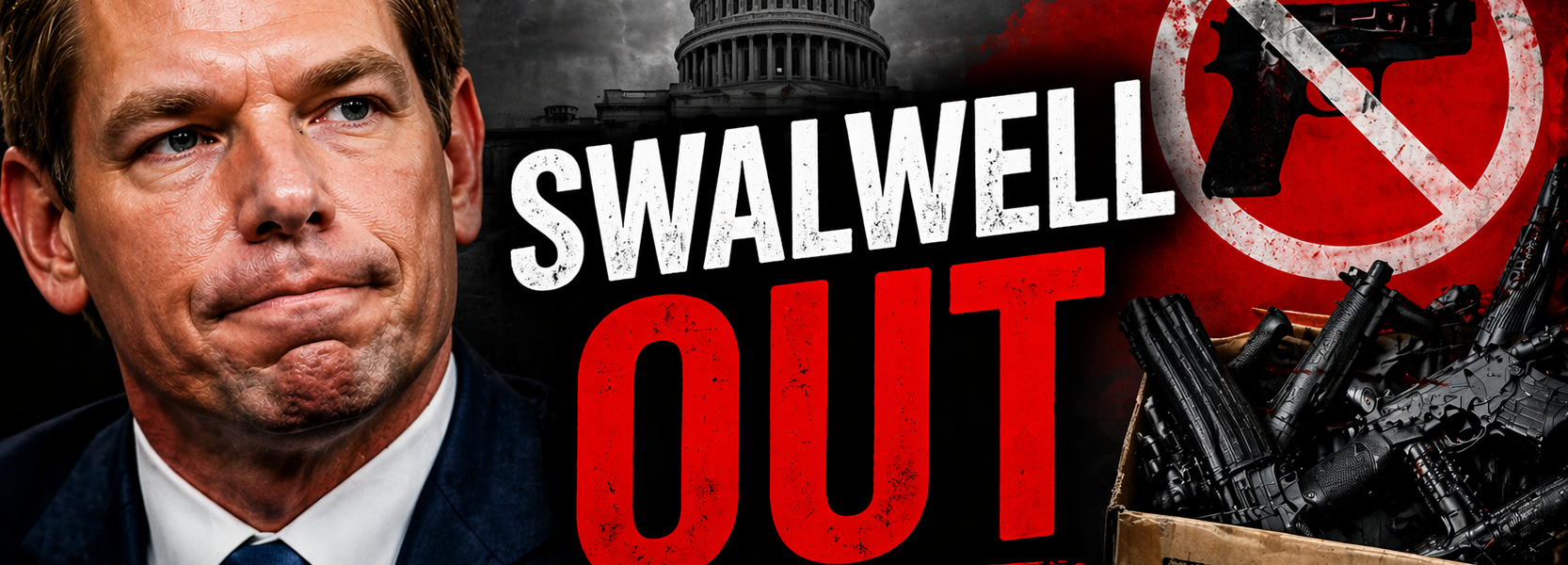
For years, Eric Swalwell built his national profile as one of the most aggressive anti-gun voices in Congress. He championed sweeping firearm restrictions, supported controversial red flag laws, and even floated extreme rhetoric about government force against American citizens.
Now, his sudden resignation amid serious allegations has left more than just political fallout in its wake. It has exposed a deeper contradiction that Second Amendment advocates have been warning about for years.
A Resignation That Raises More Questions Than Answers
Swalwell stepped down following mounting accusations, including claims of sexual misconduct and assault. While he acknowledged making “mistakes in judgment,” he stopped short of explaining what those mistakes were, leaving the public with more uncertainty than clarity.
At the same time, he criticized efforts to remove him from office, arguing that he had not been given due process.
That argument struck a nerve.
The Due Process Double Standard
Swalwell has been a vocal supporter of red flag laws—policies that allow firearms to be confiscated based on accusations or perceived threats, often before a full legal process plays out.
To many gun owners, the contradiction is glaring.
For years, Americans have been told that constitutional rights can be suspended first and sorted out later. That it is acceptable to remove someone’s ability to defend themselves based on claims that have not yet been proven in court.
Now, faced with serious accusations himself, Swalwell is invoking the very principle many of his policies sidestepped: due process.
Power, Rights, and Accountability
This moment highlights a broader concern within the gun rights community. The issue has never just been about firearms. It has always been about power.
Who decides when rights can be taken away?
What standard of evidence is required?
And does that standard apply equally to everyone?
When lawmakers advocate for policies that weaken constitutional protections, those policies do not exist in a vacuum. They set precedents.
And as this situation shows, those precedents can eventually circle back.
A Final Twist of Irony
If the allegations against Swalwell are proven true in a court of law, he could face consequences that include losing his own right to possess firearms.
In other words, the very system he supported expanding could ultimately apply to him.
The Bigger Picture
For Second Amendment advocates, this isn’t about celebrating someone’s downfall. It’s about consistency.
The Constitution does not change depending on who is accused. Rights are either protected for everyone, or they are vulnerable for anyone.
And when due process is treated as optional, it’s only a matter of time before that standard is tested in ways no one expects.