
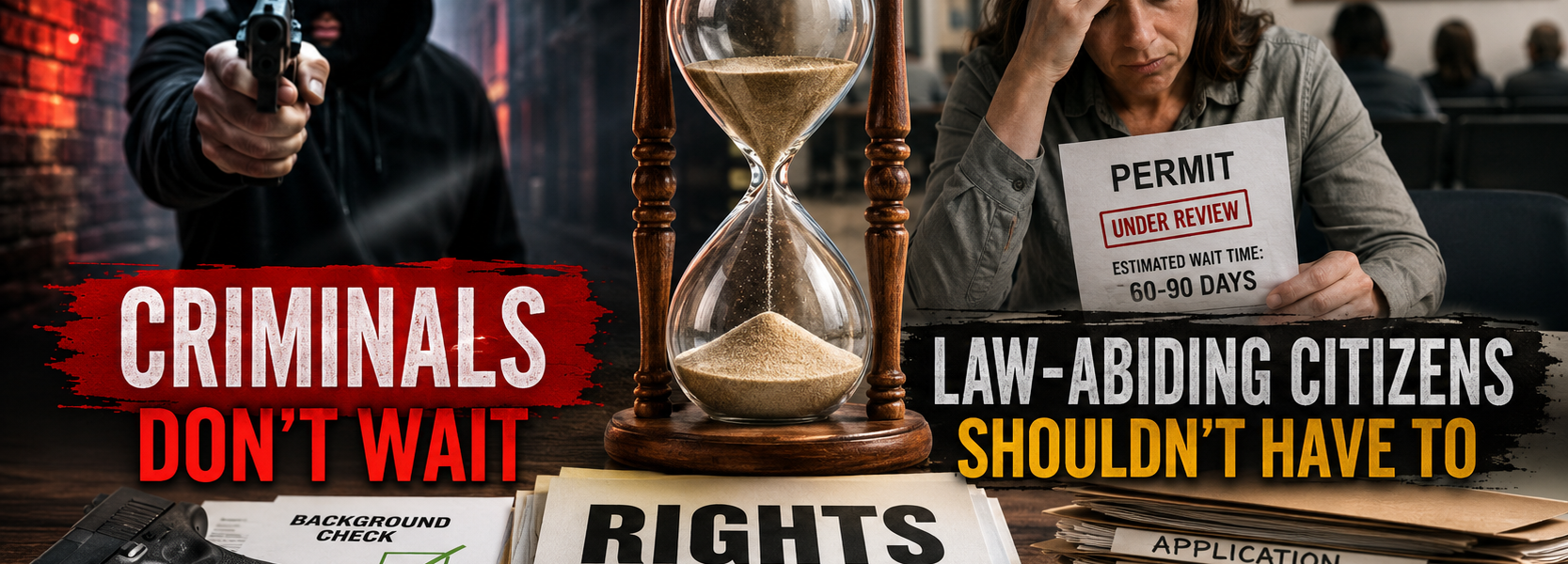
A criminal doesn’t file paperwork before choosing a victim. He doesn’t wait 30, 60, or 90 days for government approval. He doesn’t stand in line, pay fees, or wonder whether a permit application is still “under review.” He simply acts.
Meanwhile, the law-abiding citizen does exactly what society asks. They fill out every form, pass every background check, pay every fee, and wait…and wait…and wait.
For someone facing a credible threat, every day isn’t just another square on a calendar. It can feel like another spin of the roulette wheel.
Imagine being told there’s a fire outside your home—but you’ll receive permission to use the fire extinguisher in six weeks.
Imagine a woman with a restraining order against a violent ex-partner hearing that her application is “still processing.”
Imagine a store owner who has been robbed twice being told to be patient because bureaucracy moves at its own pace.
The message, intentional or not, can sound painfully simple: “Your safety can wait.”
Supporters of lengthy permitting systems often argue that more time means better vetting. Critics ask a different question: If someone has already passed the required background checks and met the legal standards, why should paperwork become another obstacle between them and their ability to defend themselves?
Rights delayed often feel like rights diminished. We would never tolerate a months-long delay before someone could speak freely, publish a newspaper, or attend church. Yet when it comes to self-defense, lengthy waits are sometimes treated as a minor administrative inconvenience.
They’re not.
For people living under credible threats, delays can become a countdown measured not in days but in sleepless nights, changed routines, and constant anxiety.
The impact varies dramatically from state to state. In some places, qualified applicants can complete the process relatively quickly. In others, processing times may stretch for weeks or months. That unevenness fuels a larger debate: Should exercising a constitutional right depend on the speed of a government office?
No permitting system can eliminate danger. No law can guarantee perfect safety. But when government delays extend well beyond what is necessary to complete required checks, critics argue the system risks becoming less about administration and more about postponement.
The irony is impossible to ignore. Criminals ignore permit requirements entirely. The only people standing in line are the ones trying to obey the law.
A permit application should not become a test of endurance.
Every unnecessary delay asks responsible citizens to accept more risk while waiting for permission to protect themselves. For someone living under a credible threat, that isn’t just frustrating—it can feel like being told to stand defenseless while the clock keeps ticking.
Because danger rarely waits for bureaucracy to catch up.