For decades, the gun control debate in America followed a familiar script. Politicians proposed bans, restrictions, and regulations. Advocacy groups rallied for or against specific laws. The battlefield was visible, legislative, and often loud.
That’s no longer the case.
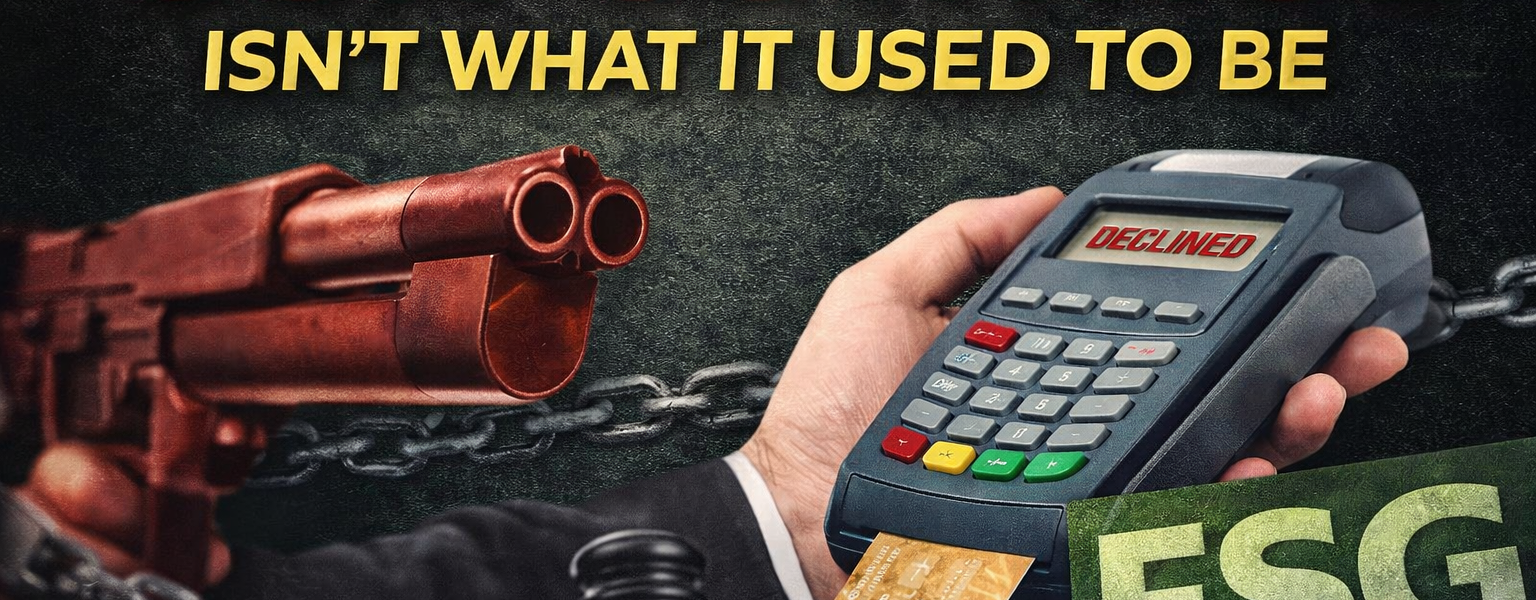
Today, the most consequential pressure on gun ownership isn’t always coming from Congress or statehouses. It’s quieter, more diffuse, and in many ways more effective. The shift has moved from direct legislation to what could be called “soft control”—a network of financial, corporate, and technological pressures that shape access without ever passing a law.
And most people haven’t fully noticed it happening.
The Rise of Soft Control
Traditional gun control relied on clear policy proposals: background checks, waiting periods, magazine limits. These were debated openly and voted on. You could track them, oppose them, and in many cases, defeat them.
Soft control works differently.
Instead of asking, “Can we ban this?” the question becomes:
“Can we make it harder, riskier, or less acceptable to support this?”
It operates through institutions that don’t write laws but still influence behavior—banks, insurers, tech platforms, and corporate governance structures.
The result is a kind of indirect regulation that never shows up on a ballot.
Banking Pressure: Quiet Gatekeeping
One of the most under-discussed levers is the financial system.
In recent years, some financial institutions have:
- declined to work with firearm manufacturers or retailers
- restricted payment processing for certain gun-related transactions
- introduced internal policies that go beyond legal requirements
You don’t need a law to shut something down if you can choke off its access to capital or payment infrastructure.
For a firearms business, losing banking relationships can be more damaging than a regulatory fine. It limits growth, disrupts operations, and sends a signal to other institutions: this is a “high-risk” category to avoid.
No legislation required.
Insurance as a Policy Tool
Insurance is another pressure point that rarely gets public attention.
Companies can:
- raise premiums for firearm-related businesses
- deny coverage altogether
- add conditions that effectively reshape operations
When insurance becomes more expensive or harder to obtain, it changes the economics of the entire industry.
This is not framed as gun control. It’s framed as “risk management.”
But the effect can be similar.
Platform Censorship and Visibility Control
In a digital world, visibility is power.
Social media platforms and online marketplaces increasingly shape what people can:
- see
- discuss
- promote
- purchase
Firearm-related content often faces:
- demonetization
- reduced reach
- outright removal depending on platform rules
Even when legal, content can be algorithmically buried.
This doesn’t ban ownership. It limits culture.
And culture drives behavior.
If fewer people are exposed to responsible gun ownership, training, and education, the ecosystem shrinks—not by force, but by attrition.
ESG and Corporate Influence
Environmental, Social, and Governance (ESG) frameworks have added another layer.
Large investment firms and corporate boards increasingly evaluate companies based on social impact metrics. Firearms often fall into a “controversial” category.
This can lead to:
- divestment from firearm-related businesses
- pressure on companies to distance themselves from the industry
- reputational risks that influence partnerships and supply chains
Again, no law is passed.
But incentives shift.
And over time, those incentives shape what industries can thrive.
Why This Matters
The shift from legislation to soft control changes the nature of the debate.
You can vote against a bill.
You can lobby a representative.
You can challenge a law in court.
But how do you respond to:
- a bank quietly closing accounts
- an insurer raising rates beyond viability
- a platform reducing your reach
- an investment firm pulling support
These actions are decentralized, often opaque, and difficult to contest.
That makes them powerful.
A New Kind of Battleground
This doesn’t mean traditional gun control efforts have disappeared. They haven’t. But they are now only part of a broader strategy.
The modern landscape looks more like this:
- lawmaking on one front
- financial pressure on another
- cultural influence shaping perception
- corporate policy reinforcing the direction
It’s a multi-layered system.
And it operates largely outside public debate.
The Bottom Line
Gun control hasn’t gone away. It has evolved.
The conversation is no longer just about what laws are passed. It’s about what systems allow—or quietly restrict—access, participation, and growth.
That shift makes the issue harder to see, harder to define, and harder to challenge.
But it also makes it more important to understand.
Because in the absence of visible rules, the real question becomes:
Who decides what is acceptable—and how are those decisions enforced?
Not always through law.
But often with the same result.