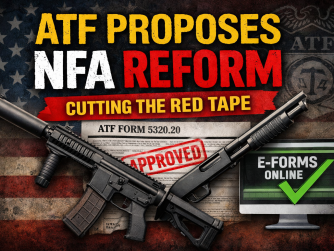

If you care about the right to keep and bear arms, this year delivered a mix of hard-fought wins, alarming power grabs, and clear signals about where the fight is heading next. Courts, states, and federal agencies all made moves that will shape gun rights for years to come. Here are the five stories that mattered most, and why they should stay on your radar.
1. Federal Courts Continue to Rein in ATF Overreach
One of the most consequential developments this year was the growing judicial pushback against the Bureau of Alcohol, Tobacco, Firearms and Explosives. Multiple federal courts questioned or blocked ATF rules that attempted to redefine firearms, parts, or ownership categories without congressional approval.
Judges increasingly cited the New York State Rifle & Pistol Association v. Bruen framework, emphasizing that gun regulations must align with the nation’s historical tradition of firearm regulation. For Second Amendment advocates, this trend matters because it signals that regulatory agencies cannot simply rewrite the law through rulemaking.
Why it matters: Unelected bureaucrats are being reminded that they do not get to invent gun law by fiat.
2. Constitutional Carry Expands While Blue States Dig In
This year saw further expansion of constitutional carry, with more states allowing law-abiding citizens to carry firearms without permits. At the same time, several deep-blue states moved aggressively in the opposite direction, enacting sweeping bans and restrictions designed to test the limits of post-Bruen jurisprudence.
These states often rushed legislation through under the banner of “public safety,” even as crime statistics told a more complicated story. Many of these laws are now tied up in court, setting the stage for major appellate and Supreme Court battles.
Why it matters: America is increasingly divided into free states and permission states, and the courts will decide which model survives.
3. Magazine and “Assault Weapon” Bans Face Serious Legal Trouble
So-called assault weapon bans and magazine capacity limits took repeated legal hits this year. Courts questioned whether banning arms that are commonly owned by millions of Americans can possibly pass constitutional muster.
Plaintiffs repeatedly argued that rifles like the AR-15 are among the most popular firearms in the country, used for lawful purposes ranging from self-defense to sport shooting. That argument, grounded in common use, is proving harder for governments to dismiss.
Why it matters: These cases strike at the heart of whether the Second Amendment protects arms people actually own, or only those the state finds convenient.
4. The Supreme Court’s Silence Was Strategic, Not Comforting
The Supreme Court of the United States declined to take up several high-profile gun cases this year, frustrating many gun owners. But legal analysts widely believe this restraint is strategic, allowing lower courts more time to apply Bruen correctly and build cleaner records.
While patience is difficult, this approach may ultimately strengthen future rulings by preventing sloppy or premature decisions.
Why it matters: The next major Supreme Court gun ruling could be decisive, and groundwork is being laid right now.
5. Cultural and Media Pressure Against Gun Owners Intensifies
Beyond courts and legislatures, this year brought a noticeable escalation in cultural hostility toward gun owners. Financial institutions, tech platforms, and media outlets increasingly framed lawful gun ownership as suspect or dangerous.
At the same time, grassroots gun communities grew more organized, more vocal, and more effective at pushing back through litigation, boycotts, and state-level action.
Why it matters: The fight for the Second Amendment is no longer just legal. It is cultural, economic, and ideological.
The Bottom Line
This year made one thing clear: the Second Amendment is not “settled law,” no matter how often critics claim it is. Every court ruling, state bill, and regulatory move is part of a larger struggle over whether the right to keep and bear arms remains a real right or becomes a hollow promise.
For Second Amendment advocates, staying informed is not optional. It is the first line of defense.